Khánh Hòa positions itself as Việt Nam’s emerging halal hub
Khánh Hòa Province is utilising its advantages to become a halal tourism and investment market of high potential.

KHÁNH HÒA — From luxury beach resorts and Chăm cultural heritage to halal-certified agriculture and tourism services, the south central province of Khánh Hòa is steadily building the foundations of a halal economy aimed at both domestic and international markets.
Trương Văn Tiến, director of the provincial Investment, Trade and Tourism Promotion Centre, told a recent Việt Nam Halal Tourism conference that the province had drawn up a plan for quality management and development policies for halal products and services.
The plan aims to gradually build a unified halal ecosystem centred on businesses while promoting the province as a halal-friendly destination.
It is designed to help businesses expand export markets and attract strategic partners, investors and projects from halal-market countries in logistics, tourism, manufacturing, processing and agriculture.
According to the Khánh Hòa Department of Culture, Sports and Tourism, the province has identified halal tourism as a key priority for diversifying international visitor markets, enhancing its competitiveness and creating new opportunities for tourism growth.
Khánh Hòa has favourable conditions for developing halal tourism, including political stability, safety, a welcoming environment, scenic landscapes, a warm climate throughout the year, and high-end, secluded resorts that appeal to Muslim travellers.
Khánh Hòa, which last year merged with the neighbouring province of Ninh Thuận, now has more than 500 kilometres of coastline with nearly 200 islands and renowned bays such as Nha Trang, Cam Ranh, Vân Phong and Vĩnh Hy.
These provide favourable conditions for beach holidays, festivals, cruise tourism, marine sports, entertainment and luxury resorts.
'Most promising destinations'
According to Bader Almatrooshi, the UAE’s ambassador to Việt Nam, Khánh Hòa stands out as one of the country's most promising destinations for attracting high-value visitors from the UAE.
The province is home to internationally recognised luxury resorts, including Six Senses and Aman, which offer the high standards of service, privacy, comfort and quality expected by visitors from the UAE.
Visitors from the UAE often travel in multi-generational families or organised groups, making spacious villas, private accommodation and family-oriented facilities especially attractive.
Khánh Hòa also offers cultural connections that resonate with visitors from the region.
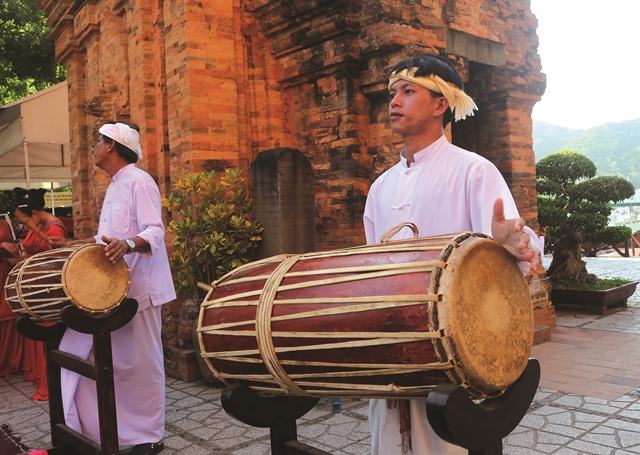
Its rich Chăm heritage reflects centuries of cultural exchanges across Asia, while its production of premium agarwood and oud holds particular appeal in the UAE, where the fragrances play an important role in daily life and tradition.
The province plans to further target Islamic tourism by encouraging investment in halal-compliant accommodation, food and beverage outlets and tourist attractions, establishing prayer rooms at airports, and training tourism workers in cultural awareness and service skills.
It is also stepping up promotion in Malaysia, Indonesia, Brunei, Singapore and other Southeast Asian markets and the Middle East.
It plans to expand international air links and develop specialised tourism packages focused on beach resorts, wellness, golf, MICE, Chăm cultural tourism, community tourism and ecotourism for halal travellers.
It is also encouraging the development of halal-certified OCOP products, tourism souvenirs, local cuisine and related services to enhance visitors' experiences and encourage longer stays.
The province will continue strengthening cooperation with halal certification organisations, diplomatic missions, airlines and international travel companies to develop products and services tailored to market demand.
Halal farming
According to the Khánh Hòa Department of Industry and Trade, the province has approved a project to develop halal-certified goat and sheep products through 2030, with the goal of becoming Việt Nam's leading centre for goat and sheep farming, processing and exports.
The project is expected to require total investments of VNĐ200 billion and target exports to Southeast Asia, the Middle East and the EU.
By 2030, the province aims to establish at least 14 farming zones on about 1,735 hectares with 200,000 goats and 300,000 sheep.
The plan also envisages setting up at least two slaughterhouses meeting halal standards, with a processing capacity of 200-300 head per day, applying cold storage and modern packaging technology.
Farms and linked production models will be developed to ensure disease prevention and control, meet biosecurity standards, and apply advanced production processes under VietGAP and HACCP while working towards halal certification from reputable international organisations for export markets.
The project also seeks to establish a disease management system ensuring that 100 per cent of halal farming zones remain disease-free in accordance with World Organisation for Animal Health standards.
It also includes building, protecting and promoting the "Khánh Hòa Halal Goat and Sheep" brand, linked with geographical indications, certification, OCOP products and international quality standards.
Business role
Businesses play a major role in shaping a complete halal ecosystem in Khánh Hòa, with many enterprises having obtained halal certification for their production and service activities.
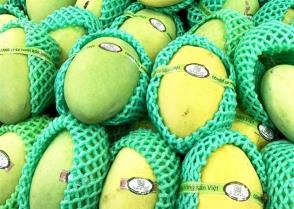
Trí Tín Co Ltd, one of the province's leading producers of sea grape products, has a dehydrated sea grapes product recognised as Khánh Hòa's first five-star OCOP product.
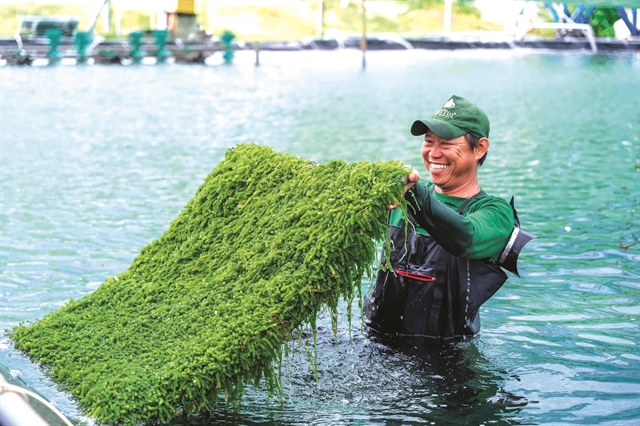
It has five products with halal certification valid until June 26, 2027, from Halal Việt Nam, a Vietnamese halal certification organisation.
They include fresh sea grapes, dehydrated sea grapes, dehydrated sea grapes in brine, nori snacks, and almond nori snacks, allowing exports to almost all Islamic countries, including members of the Gulf Cooperation Council (UAE, Kuwait, Oman, Qatar, Bahrain, Yemen and Saudi Arabia).
Lê Bền, the company's founder, said he recognised the potential of the global halal market in 2014 and began developing a process to obtain halal certification.
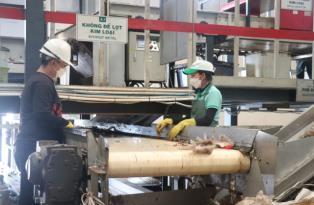
Thanks to production facilities meeting HACCP standards, together with compliance with halal requirements, the company obtained its first certification in 2015 for three sea grape products.
Halal-certified products enjoy a competitive advantage because customers in key export markets such as Singapore and the US favour them, according to Bền.
One of the most important aspects of obtaining halal certification, besides meeting production requirements, is building trust and correctly identifying target export markets because certification requirements vary considerably from one market to another.
Growing market
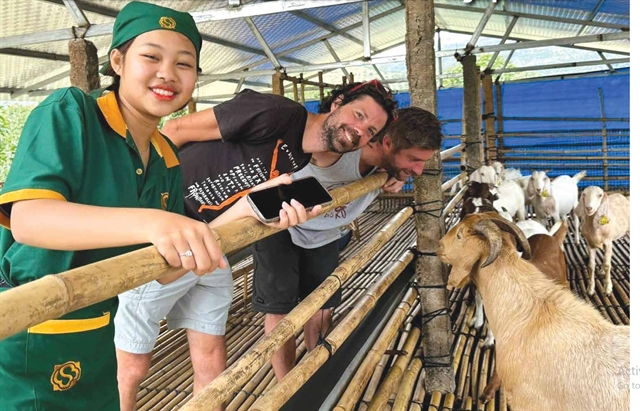
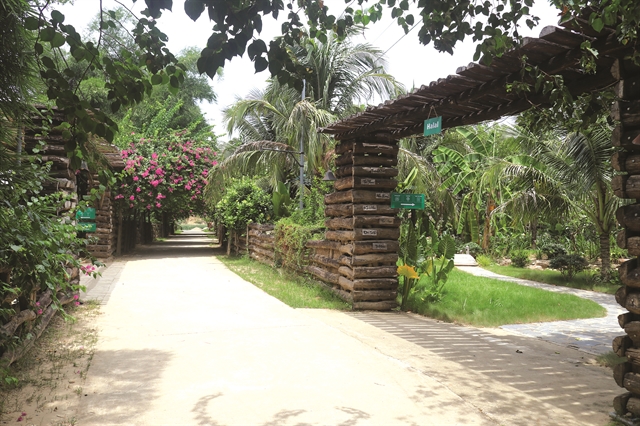
Meanwhile, Kim Ngân, co-founder of the Green Life Agricultural Tourism Cooperative, said she identified halal tourism as a development priority from the company's earliest days.
Recognising the market's potential as well as its suitability for halal visitors who prefer private spaces and immersion in nature, she began building facilities and preparing documentation for certification from halal Việt Nam for the company's Muslim-friendly farmstay and tours and halal kitchen.
She received certification in October 2024, valid until the end of September 2025. However, after flooding last year forced the farmstay to suspend operations, it reopened only in June this year, and she has since applied to renew the certification.
The company offers halal visitors private tours and resort-style accommodation for groups, targeting travellers from Malaysia, Indonesia and several Middle Eastern countries.
For accommodation providers serving halal visitors, key requirements include ensuring ingredients meet halal standards, providing prayer rooms, and maintaining separate cooking facilities for halal meals.
"These measures help build visitors' trust and are among the key factors in developing successful halal accommodation and restaurant models," Ngân said.
She also owns a company producing natural products from the farmstay, which has obtained ISO certification for its production processes.
The company was inspected by a Halal Việt Nam assessment team in June and is now awaiting certification.
Although the business is still in its early stages, she hopes to expand cultivation areas and processing facilities so it can gradually export agricultural products to key Muslim markets. — VNS