Industrial real estate market sees a preference for large-scale, sustainable developments: report
Việt Nam’s industrial real estate market is entering a new phase of development, where growth is driven not only by expansion in scale, but increasingly by project quality, investment size and higher value-added activities, according to Savills Việt Nam’s annual Industrial Insider publication.
HCM CITY — Việt Nam’s industrial real estate market is entering a new phase of development, where growth is driven not only by expansion in scale, but increasingly by project quality, investment size and higher value-added activities, according to Savills Việt Nam’s annual Industrial Insider publication.
A clear illustration of this transition can be seen in the rapid growth of the electronics sector.
According to the report, the value of electronics exports in the first ten months of 2025 increased by 140 per cent compared to 2019, and the sector continues to serve as a key growth engine for the market.
While 62 per cent of newly registered FDI projects are concentrated on ready-built factories, 68 per cent of total registered capital has been allocated to land-lease transactions, highlighting a growing trend among large manufacturers to establish long-term, large-scale production facilities in Việt Nam.
“The market is undergoing a structural shift, reflected in Việt Nam’s ongoing upgrade within the global supply chain,” said John Campbell, head of industrial real estate at Savills Việt Nam.
"The country’s core competitive advantages remain firmly in place," Campbell said.
In 2025, average manufacturing labour costs US$350 a month, which is significantly lower than those in China and Thailand.
Additionally, electricity costs for manufacturing remain highly competitive at around US$0.076 per kWh compared with US$0.112 per kWh in China and US$0.150 per kWh in the Philippines.
Regarding market performance in key economic regions during the second half of 2025, Savills reported positive fundamentals.
In the North, industrial land occupancy reached 86 per cent, with an average land price of US$141 per sq.m.
The segment of ready-built factories in the region recorded an average rental rate of US$5.1 per sq.m per month.
Meanwhile, the south continued to demonstrate strong market appeal, with industrial land occupancy reaching 90 per cent and an average land price of US$191 per sq.m. The segment of ready-built factories in the south achieved an impressive occupancy of 92 per cent, with average rental levels at US$4.4 per sq.m per month.
By 2026, the Southern Economic Zone will see major changes in infrastructure delivery, led by the opening of Ring Road 3 and the accelerated development of the Biên Hòa – Vũng Tàu expressway, significantly improving connectivity between industrial parks, ports, and the new Long Thành International Airport.
This airport will be the most transformative project, with Phase 1 on track for completion in 2026, providing capacity for 25 million passengers and 1.2 million tonnes of cargo annually and establishing a new international gateway for the region.
The Savills report also highlights the rapid emergence of next-generation industries.
Việt Nam’s data centre sector is accelerating, with total designed capacity estimated at 524.7 megawatts (MW) in 2025, a significant increase compared with previous years, and projected to reach 950 MW by 2030.
At the same time, the forecast for the semiconductor industry predicts a market size of US$16.5 billion by 2030, alongside a national target to train 50,000 engineers to meet growing demand for high-quality talent in strategic technology sectors.
According to Savills, in the new growth cycle, investors are placing increasing emphasis on infrastructure readiness, legal transparency, ESG (Environmental, Social and Governance) standards, and the long-term sustainability of projects. These factors are becoming key criteria in decisions to expand or restructure manufacturing operations.
“Beyond cost advantages, factors such as connectivity infrastructure, a clear legal framework, and the ability to meet global standards are playing an increasingly decisive role in attracting and retaining high-quality FDI,” Campbell said.
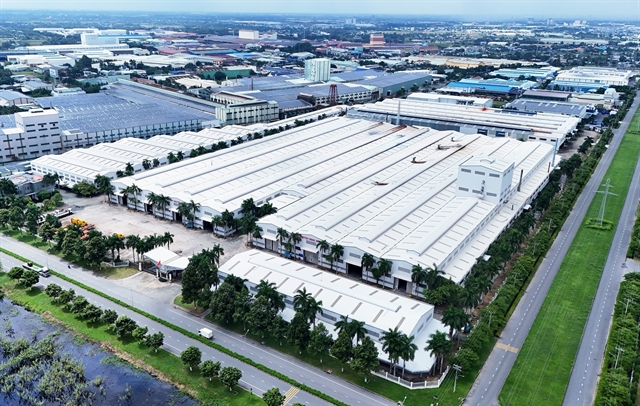
The Industrial Insider 2025 highlights a clear market preference for large-scale, sustainable developments, including eco-industrial parks and green-certified factories, driven by demand from high-tech manufacturing sectors such as electronics, semiconductors, data centres, and logistics. — VNS