Indonesia offers expanding opportunities for Vietnamese food exports
Indonesia is emerging as one of the most promising export destinations for Vietnamese products thanks to its vast consumer market, rapidly growing middle class and increasing demand for processed and health-oriented foods.
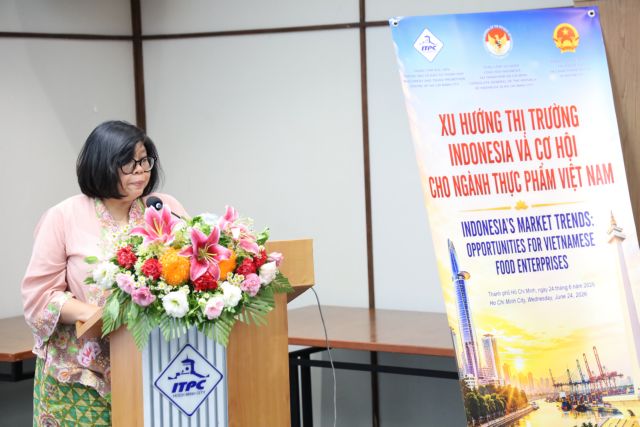
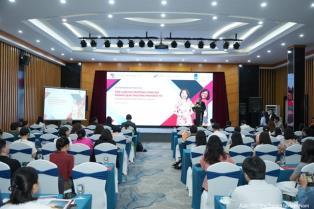
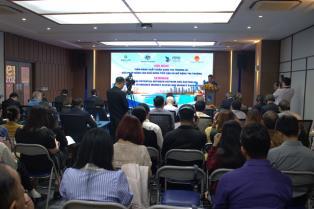
HCM CITY — Indonesia is emerging as one of the most promising export destinations for Vietnamese products thanks to its vast consumer market, rapidly growing middle class and increasing demand for processed and health-oriented foods, experts said at a seminar held in HCM City on June 24.
The seminar, titled “Indonesia’s Market Trends: Opportunities for Vietnamese Food Enterprises”, was organised by the Investment and Trade Promotion Centre of HCM City (ITPC) in collaboration with the Indonesian Consulate General in HCM City and the Vietnam Trade Office in Indonesia.
The event aimed to provide Vietnamese businesses with market information, regulatory updates and practical guidance for entering Southeast Asia’s largest economy.
Speaking at the event, Lê Anh Hoàng, deputy director of ITPC, highlighted Indonesia as a strategic market with enormous potential for Vietnamese exports, particularly food products.
“With a population of more than 280 million, Indonesia is the largest economy in Southeast Asia and one of ASEAN’s most influential members. Its vast consumer market and rapidly expanding middle class are driving growing demand for processed foods, convenience products, health-focused foods and products made from natural ingredients,” he said.
Carolina Tinangon, Consul General of Indonesia in HCM City, echoed this view, noting that beyond its large population, Indonesia benefits from a young demographic profile, a rapidly expanding middle class, accelerating urbanisation and an increasingly sophisticated consumer base.
These factors continue to drive demand for high-quality, safe and innovative food products, she said.
The bilateral trade prospects have been further strengthened by the two countries’ Comprehensive Strategic Partnership established in March 2025 and their participation in regional trade agreements such as the ASEAN Trade in Goods Agreement (ATIGA) and the Regional Comprehensive Economic Partnership (RCEP).
To help businesses seize these opportunities, ITPC plans to organise a business delegation from HCM City to participate in SIAL Interfood 2026, one of Indonesia’s leading food and beverage exhibitions, to be held in Jakarta from November 4-6, Hoàng added.
Phạm Thế Cường, Vietnamese Trade Counsellor in Indonesia, said Indonesia’s food and beverage market, valued at US$258.49 billion in 2021, is projected to reach $360.5 billion by 2026.
He highlighted Indonesia’s halal food market, estimated at $155.3 billion and accounting for 11.1 per cent of the global halal food market, as a particularly attractive segment for Vietnamese exporters.
Cường noted that Indonesian consumers are increasingly favouring convenient, health-conscious products packaged in smaller formats, while the rapid growth of online shopping through platforms such as Facebook, TikTok and Instagram is reshaping purchasing behaviour.
To succeed in the market, he recommended that Vietnamese firms work closely with local distributors and invest in sustainable packaging, attractive product presentation and transparent product information.
Providing further market insights, Danny Hidajat, director of We Link Co Ltd, described Vietnamese products as “affordable premium”, offering more consistent quality than low-cost Chinese alternatives while remaining more affordable and flexible than premium brands from Japan and Europe.
He advised businesses to enter the market through local distributors during their first year to minimise risks and better understand consumer demand.
Meanwhile, Rachmat Widyanto, Halal Audit Management Manager and Lead Halal Auditor, highlighted the growing importance of halal compliance.
He said Indonesia is experiencing a surge in halal certification registrations and noted that October 17, 2026 will mark a key deadline for mandatory halal certification covering additional product groups, including cosmetics, traditional medicines, chemicals and imported products.
From a logistics perspective, Lê Trần Nhật Phương, vice general director of Bee Logistics Corp, said Việt Nam enjoys strong connectivity with Indonesia through major shipping routes and daily direct flights to Jakarta. However, he warned that documentation errors can delay customs clearance and increase storage costs.
Despite regulatory and logistical challenges, speakers agreed that Indonesia’s large consumer base, expanding middle class and growing demand for food products present significant opportunities for Vietnamese exporters. With stronger bilateral ties and favourable trade agreements, Indonesia is increasingly becoming a strategic market for Vietnamese businesses seeking growth in Southeast Asia. — VNS