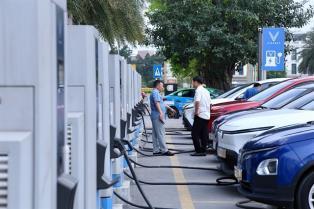
Incentive policies drive robust sales growth for automobile sector
Analysts from Vietnam Investors Service (VIS) Rating, an affiliate of Moody’s, wrote in a recent report that Government policy incentives, competitive pricing and volatile petrol prices have increased consumer interest in EVs.
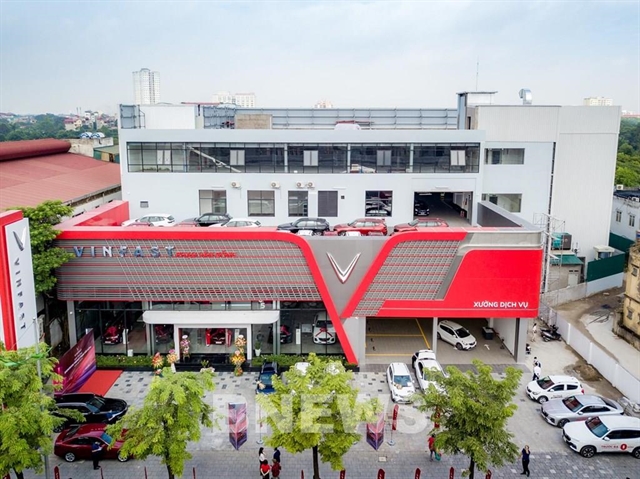
HÀ NỘI — The adoption of strong incentives for electric vehicles (EVs) and the rapidly growing presence of Chinese cars in the market have driven robust sales growth in the automobile sector, industry analysts said in a recent report.
In the report, analysts from Vietnam Investors Service (VIS) Rating, an affiliate of Moody’s, said that government incentives, competitive pricing and volatile petrol prices have increased consumer interest in EVs.
Law 09/2026/QH16 extends preferential special consumption tax rates of 1-3 per cent for EVs through the end of 2030, rather than expiring in February 2027, while Decree 202/2026/NĐ-CP extends the 0 per cent first-time registration fee rate for battery EVs through the end of 2030. Decree 202 extends a policy that has been in place since 2025.
“Extended tax and fee incentives will continually preserve electric vehicles’ price advantage and support demand for electric vehicles over the medium term,” the analysts noted.
According to data from the Vietnam Automobile Manufacturers Association, car sales reached 303,391 units in the first half of 2026, up 33.8 per cent year-on-year, mainly driven by a 72 per cent year-on-year increase in VinFast EV sales to 115,916 units, while hybrid vehicle sales rose 83 per cent year-on-year to 10,865 units.
Sales of internal combustion engine cars rose by an estimated 13 per cent year-on-year to around 174,000 units in the first half of 2026, indicating resilient demand beyond electrified vehicles. However, many long-established brands are losing market share, including Toyota, Hyundai and Ford.
Completely built-up vehicle imports rose 28.9 per cent year-on-year to US$2.8 billion, led by imports from China, which increased 71.2 per cent to $1.26 billion.
Chinese vehicles are generally competitively priced and offer advanced technology features, giving consumers more choices and intensifying competition in the market.
Despite robust sales growth, VIS Rating analysts forecast that intense competition and higher borrowing costs might weigh on the credit profiles of the automobile sector in the second half of this year.
“Financing access remained sound but borrowing costs edged up, and bond maturities will raise refinancing needs in the second half of this year,” they wrote.
The automobile sector’s financing access remained stable, with listed automotive firms reporting a 7.3 per cent increase in total debt in the first half of 2026. Debt growth was concentrated among large firms to finance expansion of their car distribution businesses.
Meanwhile, borrowing costs increased for both car dealers and buyers, as listed firms' effective interest rates rose by 1-4 per cent year-on-year, while bank car loan rates increased by up to 2 per cent year-on-year in the first half of 2026.
“We expect interest rates to remain elevated over the next 12-18 months, pressuring consumer demand and working capital financing for automotive firms,” the analysts noted.
New bond issuance remained subdued, with no bonds issued in the first half of 2026. However, bonds worth VNĐ2.5 trillion will mature in the second half of 2026, increasing refinancing pressure and likely prompting new issuance activity.
The analysts also said that despite growth in revenue and earnings before interest, taxes, depreciation and amortisation, weaker core operating margins and slower inventory turnover weighed on operating cash flow, which was negative for most listed automotive firms.
“These pressures, together with intensifying competition, will continue to constrain the credit profiles of the automobile industry in the second half of this year,” the analysts wrote. — BIZHUB/VNS