HCM City targets sports economy as new growth engine
As the nation's primary economic engine, HCM City is strategically positioning the sports sector as a new driver for growth, leveraging high-profile events and a burgeoning mass-participation market.
HCM CITY — As the nation's primary economic engine, HCM City is strategically positioning the sports sector as a new driver for growth, leveraging high-profile events and a burgeoning mass-participation market.
In the landscape of modern urban development, physical fitness and competitive sports have become inextricably linked with quality of life and the service economy.
For HCM City, this journey began in the late 1980s.
By hosting international marathons, the Golden Racket table tennis tournament, and trans-Viet Nam cycling races, the city laid the early groundwork for mobilising non-budgetary resources and fostering a "socialisation" approach to athletics.
Today, that foundation has evolved.
Spectators and athletes no longer arrive just for the whistle; they fuel a comprehensive ecosystem of accommodation, dining, shopping, and entertainment.
Revenue from sponsorship, broadcasting rights, and sports merchandise are now contributing directly to the city’s coffers.
The city has recently shifted towards an ‘open’ model, bringing elite sports out of closed stadiums and into public spaces and central urban corridors.
Nguyễn Nam Nhân, deputy director of the city’s Department of Culture and Sports, said this strategy does more than just encourage local participation; it nurtures a dynamic image that is highly attractive to global brands.
The economic dividends of this approach are already evident:
2024 Teqball World Championships: Held on Nguyễn Huệ Walking Street, the event reached a potential global audience of 470 million across 74 countries, generating an estimated media value of US$2.1 million.
2025 International Martial Arts Festival: Attracted 35,000 spectators and garnered 8.67 million social media impressions, with a media value of approximately VNĐ16.5 billion ($626,215).
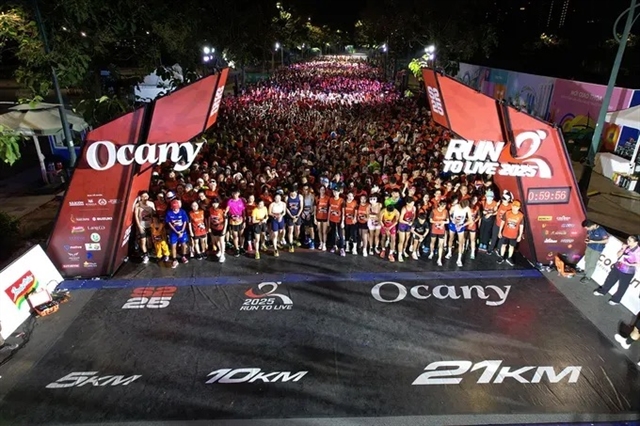
Mass Participation: The second season of the 'Run To Live' race recently saw 10,000 runners take to the streets, highlighting the city's appetite for active lifestyle events.
Global trends show that in major metropolises, sports eventually mature into a full-scale entertainment economy.
HCM City is well-positioned to follow suit. Currently, over 36.7 per cent of the city's population exercises regularly, and more than 15,600 sports facilities and clubs are in operation.
"This is a vital foundational market. Without a sufficiently large community of participants, it would be difficult to sustainably develop services, retail, and sponsorship,” Nhân said.
To move forward, experts argue the city must transition from viewing sports as mere physical education or standalone tournaments to a market-oriented ‘soft industry’.
This involves a multi-layered approach covering sports medicine, technology, training, and venue management.
Realising this vision requires a synchronised policy framework.
This includes smarter land-use planning for infrastructure, robust public-private partnership (PPP) mechanisms, and streamlined procedures for event organisation.
Lý Đại Nghĩa, director of the city Sports Training and Competition Centre, said the city's high income levels and population size provide a solid base for a diverse market.
“By integrating sports with tourism and media, the city is not just enhancing the health of its citizens but is also securing a new, high-value stream of economic revenue.”
As sports become an integral part of the city’s identity, it is fast becoming an emerging international hub for cultural and athletic exchange, proving that a healthy population is indeed a wealthy one. — VNS