HCM City steps up decisive action to lift IUU yellow card
The city will fast-track eCDT implementation, study the feasibility of a fishing port in Cần Giờ, and propose granting accounts to border guard stations to strengthen oversight of vessel movements.
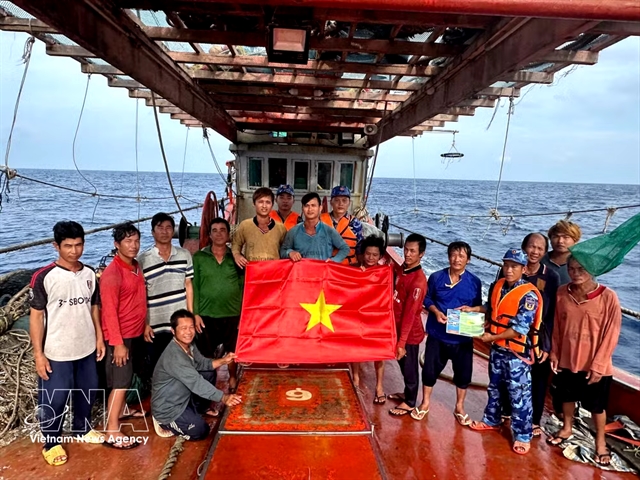
HCM CITY – While notable progress has been made in tackling illegal, unreported and unregulated (IUU) fishing, lingering gaps still require stronger, more coordinated action to fully meet recommendations from the European Commission (EC), particularly after its fifth inspection, Vice Chairman of the HCM City People’s Committee Bùi Minh Thạnh said.
At a meeting with the municipal Department of Agriculture and Environment and relevant agencies on April 29, Thạnh called for strict enforcement of directives from the Government and the Ministry of Agriculture and Environment, assigning the department a lead role in urgently finalising policies for sustainable fisheries.
Key measures include supporting livelihood transitions, phasing out inactive vessels, supporting the installation of vessel monitoring systems (VMS), and accelerating the rollout of electronic catch documentation and traceability (eCDT) and e-logbooks within the second quarter of 2026.
He also urged a comprehensive review of vessels deregistered on paper but still operating in practice, while reinstating eligible vessels and tightening controls to bar unqualified boats from going to sea.
The city will fast-track eCDT implementation, study the feasibility of a fishing port in Cần Giờ, and propose granting accounts to border guard stations to strengthen oversight of vessel movements.
Enhanced inter-provincial coordination, particularly with Lâm Đồng, Đà Nẵng, Quảng Trị and Ninh Bình, was also emphasised to tighten control and strictly handle violations, especially those related to VMS.
According to Phạm Thị Na, Deputy Director of the municipal Department of Agriculture and Environment, the city had 4,445 fishing vessels as of the end of April 2026, all registered and integrated into the national Vnfishbase system.
However, 398 vessels remain ineligible for operation and are under strict monitoring to prevent illegal departures. A 24/7 monitoring system, combined with eCDT at fishing ports and border posts, has ensured that no local vessels have been found violating foreign waters since early 2026.
Since January 1, 2024, the city has issued hundreds of certifications for tens of thousands of tonnes of seafood, while accelerating the rollout of e-logbooks, expected to be completed by 2027.
Challenges remain, including vessels with unclear ownership after deregistration, the lack of fishing ports, and unresolved cases of VMS disconnections, many involving vessels operating outside the locality.
In response, authorities are ramping up awareness campaigns on sustainable fishing, supporting livelihood transitions, and subsidising VMS installation and e-logbook costs. The city will continue enhancing digital traceability systems, review vessel registration, and consider developing additional fishing ports.
Participants also called for more targeted outreach, sustained use of modern monitoring systems, early detection of violations, and stronger coordination between onshore and offshore forces to boost enforcement effectiveness. — VNA/VNS