HCM City says how it plans to achieve 10-11% annual export growth for rest of decade
The southern economic hub aims to strengthen its role as the country’s largest import-export centre while developing into a regional transhipment centre in Southeast Asia, supported by green and digital transformation and a circular economy.
HCM CITY — HCM City has outlined measures to expand production capacity, cut logistics costs, diversify export markets, and help businesses meet increasingly stringent international standards as it targets average annual export growth of 10-11 per cent through 2030.
Nguyễn Ngọc Thạch, deputy head of the HCM City Department of Industry and Trade’s international economic division, said under Decision No. 4196/QĐ-UBND, the southern economic hub aims to strengthen its role as the country’s largest import-export centre while developing into a regional transhipment centre in Southeast Asia, supported by green and digital transformation and a circular economy.
“The objective of HCM City’s export development plan for the 2026-30 period is not merely to increase export turnover, but to comprehensively reposition the city’s export activities towards greener, more transparent, and high-tech production.”
He said the city’s exports rose from US$155 billion in 2020 to $192.5 billion in 2025, accounting for a fifth of the country’s total.
In the first eight months of 2026, the exports increased by 7.82 per cent year-on-year to $65.83 billion.
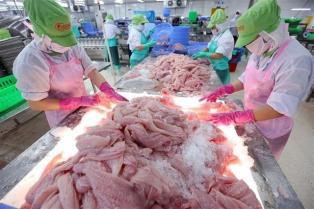
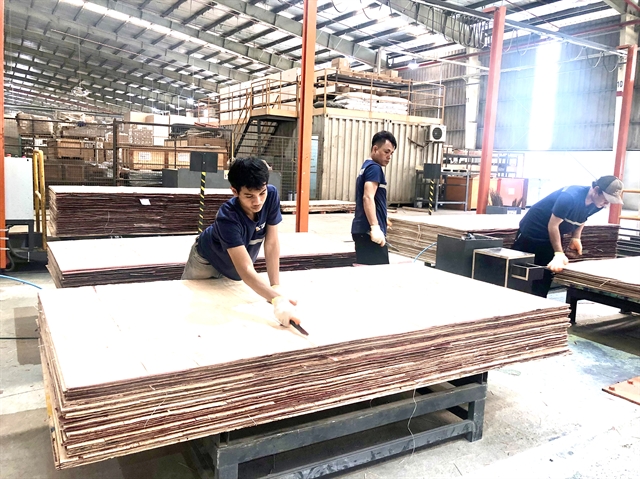
Manufacturing remained the dominant exports, accounting for 76.7 per cent of the total, while agricultural, forestry, and fisheries products accounted for about 15.9 per cent.
The US was the city’s largest export market, accounting for 21.1 per cent of total exports, followed by China with 15.1 per cent, and the EU with 14.3 per cent.
Under Decision No. 4196, the city targets average annual export growth of 10-11 per cent in 2026-30. It aims to raise the share of industrial exports to 90 per cent and ensure that more than 75 per cent of exports meet the requirements of markets that have free trade agreements with Việt Nam.
It also aims to reduce logistics costs to around 11 per cent and raise satisfaction with customs administrative procedures to more than 95 per cent.
However, three major bottlenecks are hindering the city’s efforts to achieve double-digit export growth: low local value-added content, high logistics costs, and increasingly stringent requirements for product standards, environmental performance, and traceability in international markets, according to Thạch.
To achieve these targets, the city has identified a range of measures.
It will focus on expanding production capacity and export supply by strengthening brands and attracting FDI to sectors such as semiconductors and clean energy. It will establish commodity and agricultural product exchanges, develop a marine aquaculture scheme, and build supply chains for OCOP and key agricultural products that meet international standards.
The city will diversify export markets through stronger trade links with high-potential regions such as the Middle East and Southeast Asia, while consolidating traditional markets. Trade promotion will shift towards more specialised connections tailored to individual industries.
It will also promote “on-the-spot” exports linked to shopping tourism and outlet centres, while encouraging cross-border e-commerce under the Go Digital, Go Global programme.
Customs procedures will be progressively digitalised, while origin controls will be tightened to prevent illegal transhipment and origin fraud. An early-warning system for trade-remedy risks in overseas markets will also be developed to help businesses respond proactively to trade defence cases and technical barriers.
Another priority is to mobilise resources for export development, upgrade warehousing and logistics infrastructure, and improve logistics efficiency.
The city will also promote a circular and green economy through selective import policies, restrictions on energy-intensive technologies, greater use of high-tech and energy-efficient equipment, diversifying sources of raw materials, and supporting businesses with adopting clean technologies and meeting environmental requirements in export markets.
Greater emphasis will be placed on linking domestic businesses with foreign-owned companies through industry associations, helping the former participate more deeply in global supply chains.
The city will also provide financial support through the HCM City Finance and Investment State-owned Company for exporters investing in technological renewal under relevant special mechanisms.
Stronger trade promotion
Alongside measures on production and infrastructure, the city is also renewing its export promotion activities.
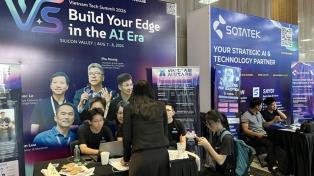
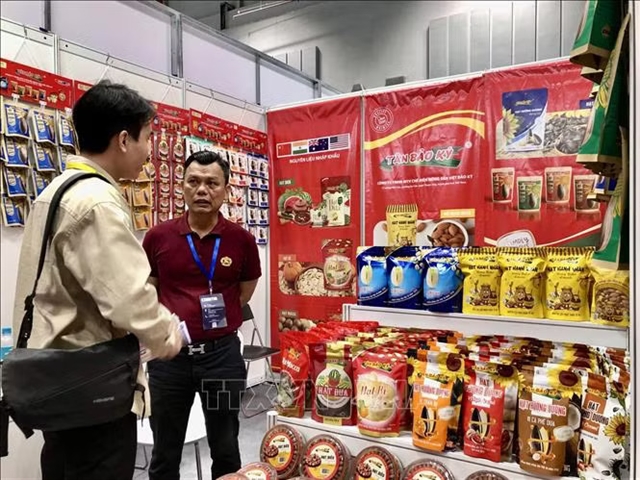
Trần Phú Lữ, deputy director of the Investment and Trade Promotion Centre of HCM City (ITPC), said the centre had organised 75 trade promotion activities in the first nine months of 2026, including 21 export-focused programmes, which directly supported businesses with B2B connections, sample orders, and the signing of formal contracts.
“Going forward, the ITPC will strengthen surveys of business needs through industry associations to develop targeted trade promotion programmes, support product promotion, expand markets and make more effective use of free trade agreements.
“It will step up specialised trade fairs and exhibitions, B2B matchmaking with importers, distributors, foreign-owned enterprises, and cross-border e-commerce platforms, and expand training in branding, product quality, and market development.”
He added that the ITPC would also diversify digital trade promotion activities and strengthen cooperation with foreign trade promotion organisations, Vietnamese trade counsellors abroad, business associations, and international organisations to expand its partner network and build a database to support trade promotion.
In terms of markets, HCM City would consolidate traditional markets such as the US, China, the EU, Southeast Asia, and Northeast Asia, while expanding into India, Eastern Europe, Australia, New Zealand, Canada, the Middle East, Latin America, and Africa, with a focus on developing halal products, he said.
In terms of products, priority would be given to key industrial products with competitive advantages, high technology content, and high added-value, green and circular products, and those with potential for increased exports, he added. — VNS