HCM City, Japanese businesses push to deepen economic ties, seek balanced green-transport transition
Japanese businesses and HCM City authorities on Friday reaffirmed their commitment to strengthening economic cooperation at an annual high-level roundtable aimed at easing regulatory bottlenecks and supporting Japan’s long-standing investor community in Việt Nam’s southern economic hub.
File:

HCM CITY — Japanese businesses and HCM City authorities on Friday reaffirmed their commitment to strengthening economic cooperation at an annual high-level roundtable aimed at easing regulatory bottlenecks and supporting Japan’s long-standing investor community in Việt Nam’s southern economic hub.
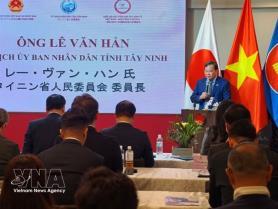
The Japan-HCM City Business Roundtable brought together senior city officials, the Consulate General of Japan and representatives of the Japanese Business Association of HCM City (JCCH).
Japan remains one of the city’s most influential economic partners, with more than 2,200 registered projects worth over US$15 billion.
Speaking at the event, Ono Masuo, Consul General of Japan in HCM City, said the consulate would “continue to serve as a key bridge” connecting Japanese companies with municipal authorities and facilitating deeper dialogue across government agencies.
He said a predictable, business-friendly environment was essential as the two countries advance their upgraded Comprehensive Strategic Partnership, adding that Japan stands ready to support Việt Nam’s industrial development in high-tech sectors, digital transformation and green-transition initiatives.
City leaders, including Chairman Nguyễn Văn Được and Deputy Chairman Nguyễn Lộc Hà, said the roundtable, now more than two decades old, had become a trusted forum delivering practical, long-term benefits for both sides.
Hà praised Japanese investors for their professionalism, resilience and commitment to workforce development, public infrastructure and industrial-park expansion.
A key recommendation raised by JCCH this year concerns the city’s planned transition to green transportation.
JCCH Chairman Kume Kunihide said Japanese companies support sustainability goals but warned that an abrupt shift from petrol vehicles to electric vehicles (EVs) could create significant challenges.
He noted the city currently operates only one metro line, continues to rely heavily on buses and motorbikes, and still lacks sufficient EV-charging infrastructure.
Kume, who uses a VinFast electric car in HCM City, said safety and reliability in EV charging remain concerns.
He added that businesses and residents could face financial pressure if required to replace petrol vehicles before support policies and a viable secondary market for used vehicles are in place.
The comments come as the city drafts a multi-phase plan to reduce transport-related emissions.
The first phase targets 100 per cent electrification of bus fleets by 2030, supported by subsidies for vehicle conversion and charging-station development.
A broader proposal covering taxis, ride-hailing fleets, trucks, passenger cars and state-owned vehicles is expected to be submitted to the city legislature in 2026.
This year’s roundtable focused on four areas that Japanese firms say continue to hinder operations: legal and labour regulations, taxation, customs procedures and the urban living environment.
Consul General Ono said he hoped direct dialogue would help resolve outstanding issues “step by step”, further strengthening investor confidence and bilateral cooperation.
The event was co-organised by the HCM City Investment and Trade Promotion Centre (ITPC) and the Japanese Business Association of HCM City. — VNS