HCM City approves free-trade zone in push to become regional economic hub
The National Assembly on Thursday approved the creation of a free-trade zone in HCM City, handing the country’s largest economic centre sweeping new powers and incentives to fast-track investment and strengthen its push to become a regional hub.
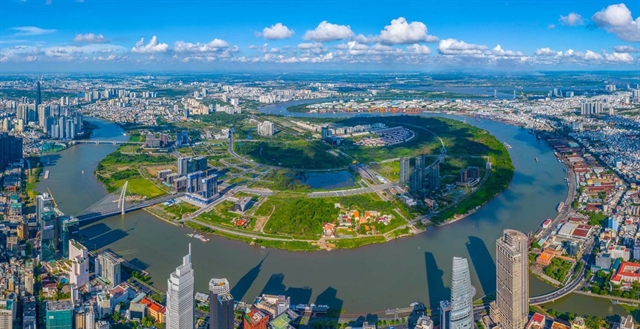
HCM CITY — The National Assembly on Thursday approved the creation of a free-trade zone in HCM City, handing the country’s largest economic centre sweeping new powers and incentives to fast-track investment and strengthen its push to become a regional hub.
The resolution, passed with more than 91.5 per cent support, allows the city to pilot a set of special mechanisms and breakthrough policies covering investment, finance, trade, services and high-skilled labour.
Under the plan, the HCM City People’s Council will determine procedures and boundaries for establishing and expanding the free-trade zone.
The city government will have the authority to make similar decisions for a zone linked to the Cái Mép Hạ deep-sea port cluster, a key gateway for global trade.
The zone will be directly managed by the city’s Export Processing and Industrial Zones Authority, marking a shift from the current system in which approval for industrial and economic zones rests with the Prime Minister.
In a major incentive package, projects inside the free-trade zone, excluding residential real estate, will be exempt from land-auction and bidding requirements, a move aimed at speeding up investment and infrastructure development.
Companies investing in the zone will be able to register through fast-track procedures and receive some of the country’s most generous tax incentives, including a corporate income tax cut to 10 per cent for 20 years, with four years of full exemption and nine additional years at a 50 per cent reduction, along with a 50 per cent personal income tax cut for 10 years for high-skilled workers, experts and scientists.
In another major shift from current rules, firms in the zone will be permitted to list, value assets and make payments in foreign currencies, relaxing restrictions that normally apply under Việt Nam’s foreign exchange regulations.
The Government said the special regime is essential to reduce bureaucratic delays and create a competitive edge as the city pursues its long-stated ambition to become an international financial centre.
The resolution also grants the city the right to retain all revenue generated from land development in areas designated for Transit-Oriented Development (TOD), an urban model centred around public transport.
The funds will be prioritised for metro lines and transport corridors linked to TOD zones. Over the next decade, the city expects to develop 355km of urban rail and build TOD clusters around 11 metro stations.
Officials said the new measures represent one of the most significant decentralisation steps in years, giving HCM City enhanced autonomy to restructure its economy and attract higher-value investment. — VNS