HCM City aims to build national energy, industrial hub
HCM City is laying the groundwork for a multi-pole national energy and industrial hub.
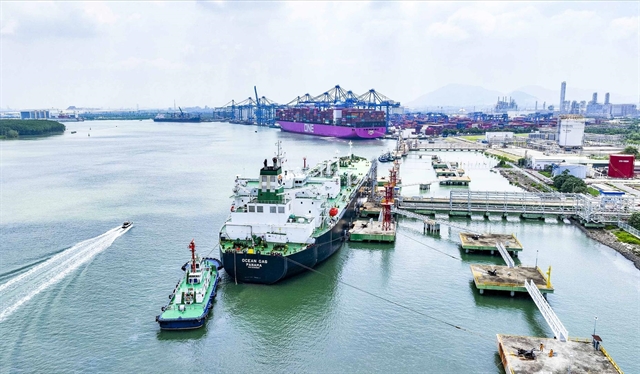
HCM CITY — HCM City is laying the groundwork for a multi-pole national energy and industrial hub.
The project will secure regional energy supplies and accelerate green transition. It will also drive double-digit economic growth across the Southern Key Economic Zone.
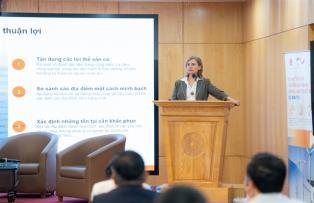
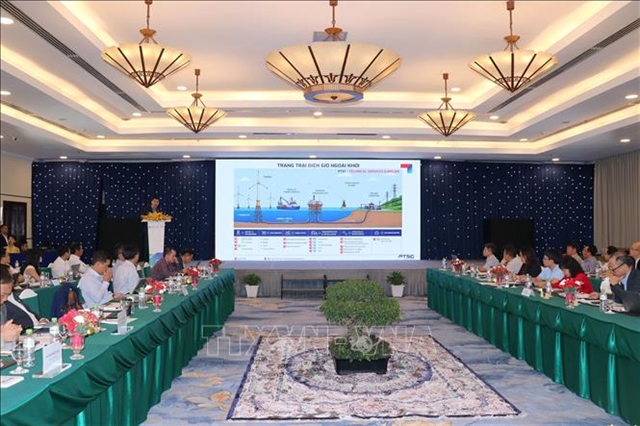
The city’s Department of Industry and Trade hosted a seminar on July 31, garthering government officials, experts, and business leaders to discuss and finalise the draft outline.
Nguyễn Thị Kim Ngọc, deputy director of the department, highlighted the advantages of the city’s expanded space, including strong deep-sea ports, logistics, and technology.
"Establishing this hub is crucial for energy security. It will build modern energy capabilities. It will also create new growth momentum for our double-digit target."
Bùi Tá Hoàng Vũ, director of the department, said high-tech investors are demanding huge amounts of power.
The city’s current peak capacity is around 9,600MW. However, one strategic investor recently requested 2,000MW.
This demand equals nearly one-fifth of the city's total capacity.
"Five major projects would be invested in the city," Vũ said.
"This puts great pressure on our energy grid. However, HCM City is not starting from scratch.
“We have strong potential. With integrated physical and soft infrastructure, this will become a top regional centre."
Multi-pole ecosystem and integrated value chains
The project will operate as a multi-pole ecosystem rather than a single concentrated site.
The draft outline identifies three key industrial poles.
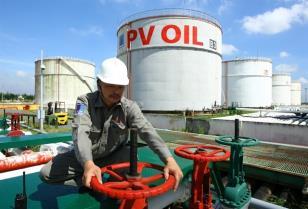
Long Sơn focuses on petrochemical refining and specialty chemicals. It will produce advanced materials and implement carbon capture technology.
Phú Mỹ-Cái Mép-Thị Vải focuses on Liquefied Natural Gas (LNG) and gas-to-power generation. It will manage specialised deep-sea ports and energy logistics.
Rạch Dừa-Sao Mai-Bến Đình focuses on offshore wind engineering and heavy manufacturing. It will offer oil and gas services, alongside high-tech maintenance.
These poles will link with research institutes and universities.
They will also connect with the financial sector, and leverage the emerging Vietnam International Financial Centre to attract green capital.
Lê Việt Cường, deputy director of the Institute of Energy, urged the city to adopt a unified strategy.
"The city must act as the core of the national clean energy chain. We must build a synchronised ecosystem. It should connect infrastructure, industry, data, finance, and human resources," Cường said.
Business leaders praised the potential of localised renewable energy manufacturing. They cited international precedents like Cuxhaven in Germany and Shandong in China.
Trần Hồ Bắc, general director of PetroVietnam Technical Services Corporation (PTSC), said PTSC fabricated 33 offshore wind foundations for export to Taiwan (China).
The contract generated over US$400 million, and created jobs for more than 3,000 skilled workers.
PTSC estimates that the new national hub could add $2 billion annually to the regional economy, and create tens of thousands of specialised engineering jobs.
Clear roadmap to 2045
The project follows a three-phase timeline.
In Phase 1 from 2026-30, authorities will establish legal frameworks and spatial planning. They will digitise data and build shared infrastructure.
In Phase 2 from 2031-35, the city will expand industrial sub-zones. It will build offshore wind supply chains and increase local content ratios.
In Phase 3 from 2036-45, the city will fully develop the hub. It will become a nationally integrated and internationally competitive centre.
The Department of Industry and Trade will gather all recommendations. They will refine the outline before submitting it for government approval. — VNS