HCM City addresses business bottlenecks in industrial zones
HCM City authorities on Friday pledged to work with businesses to resolve tax, investment and administrative obstacles, while addressing concerns over industrial zone conversion and long-term investment planning.
HCM CITY — HCM City authorities on Friday pledged to work with businesses to resolve tax, investment and administrative obstacles, while addressing concerns over industrial zone conversion and long-term investment planning.
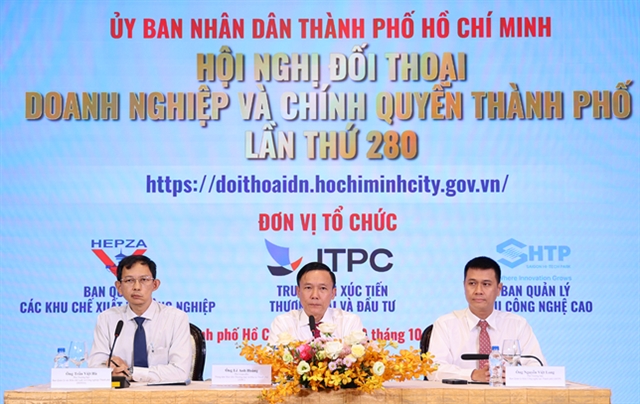
The issues were raised at the 280th HCM City Business–Government Dialogue Conference, held on October 9 to discuss difficulties facing enterprises in high-tech parks, export processing zones and industrial parks.
The conference was organised by the city Investment and Trade Promotion Centre (ITPC), in coordination with the city Export Processing and Industrial Zones Authority (HEPZA) and the Saigon Hi-Tech Park Management Board (SHTP).
Speaking at the opening, ITPC Deputy Director Lê Anh Hoàng said the dialogue provided an opportunity for businesses to directly raise difficulties encountered during investment and operations.
Addressing these obstacles would help improve operational efficiency and support the city’s development priorities for 2026.
HEPZA Deputy Head Trần Việt Hà said the authority was shifting from a focus on licensing and administrative procedures towards accompanying businesses throughout their projects, from investment promotion to stable operations.
It would seek to resolve issues within its jurisdiction and coordinate with relevant departments and agencies on matters requiring broader intervention.
Tax and administrative bottlenecks
Tax obligations and financial procedures were among the main concerns raised by enterprises.
Businesses reported discrepancies in tax records, including cases in which tax liabilities and late-payment charges remained on administrative systems despite tax exemptions or reductions having been granted.
They called for better reconciliation of payment records and more timely processing of tax decisions.
One issue involved the non-agricultural land-use tax, where businesses sought clarification on exemptions, reductions, deductions and late-payment amounts arising from disruptions in the transfer of tax management data.
Enterprises also called on the relevant authorities to issue tax exemption and reduction decisions within the prescribed timeframes and clarify the application of value-added tax (VAT) to bank service fees charged to export-oriented businesses.
Companies operating in export processing zones also raised concerns about VAT charged on banking services.
They sought clearer guidance on the tax treatment of services supplied to enterprises operating in non-tariff zones, particularly those engaged entirely in export production.
The discussions highlighted the need for consistent interpretation of tax regulations and closer coordination between tax authorities, banks and businesses to prevent administrative discrepancies from creating additional costs.
Investment and land procedures were another priority. Businesses requested clearer guidance on the concurrent processing of applications to adjust investment policy decisions and applications for land allocation.
They also sought clarification on investment security deposits and procedures for registering or adding business lines.
To reduce paperwork and processing time, enterprises proposed wider and more consistent acceptance of electronic Investment Registration Certificates (IRCs) and Business Registration Certificates.
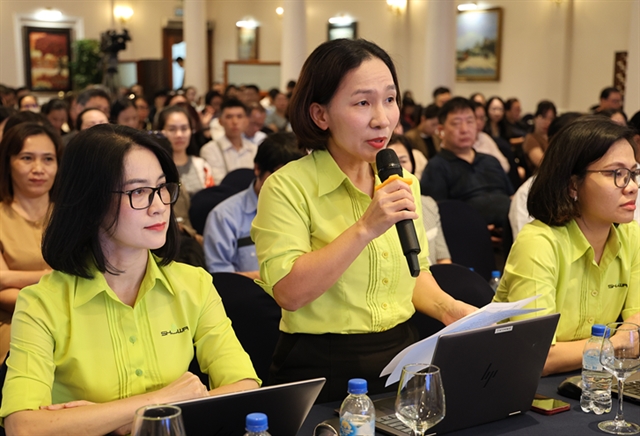
The conference also covered customs procedures for processing activities and import-export operations, as well as issues involving product pricing and market access for high-tech products.
The future of existing export processing zones and industrial parks was another key concern, particularly for companies making long-term investment decisions.
Huỳnh Công Khánh, factory management manager at Usui Brush Vietnam Co., Ltd., said the company had operated in Tân Thuận Export Processing Zone for more than seven years. He asked about reports that the zone might be relocated in 2041, seeking clarification to help the company plan its future investments.
In response, HEPZA Deputy Head Trần Việt Hà said Tân Thuận Export Processing Zone had a 50-year operating term, running from 1991 to 2041.
However, no official information on a conversion plan for the zone had been announced.
HEPZA was developing a proposal to transform export processing zones and industrial parks in association with the restructuring of key industrial sectors, he said.
He added that, in principle, commitments stated in enterprises’ investment certificates would continue to be respected during Tân Thuận’s operating period through 2041.
The issue is significant for businesses deciding whether to expand production capacity, upgrade facilities or commit additional capital to existing sites.
Clear information on future land use and industrial development plans would help enterprises make investment decisions with greater certainty.
Beyond immediate administrative problems, enterprises raised issues concerning green transformation, environmental protection, energy infrastructure, market support, supply chains and occupational health management.
These concerns reflect the wider challenges facing industrial businesses as they seek to improve productivity, comply with environmental requirements and maintain competitiveness in export markets.
Companies called for clearer support mechanisms and more effective coordination between management agencies to facilitate the adoption of greener production practices and improve access to markets and supply chains.
The discussions also highlighted the importance of ensuring that infrastructure and regulatory arrangements keep pace with changes in industrial production and investment needs.
For HCM City, resolving these issues is closely linked to efforts to improve the business environment and attract investment into its industrial zones and high-tech facilities.
The conference provided a direct channel for enterprises to seek answers from management authorities and relevant agencies.
Issues beyond the organisers’ jurisdiction would be compiled and forwarded to the competent authorities for consideration and responses in accordance with regulations.
The next step will be to translate the concerns raised into concrete administrative solutions, particularly in areas requiring coordination among multiple agencies, so that businesses can operate with greater certainty and fewer procedural obstacles. — VNS