Hà Nội's green vehicles will have different licence plate backgrounds
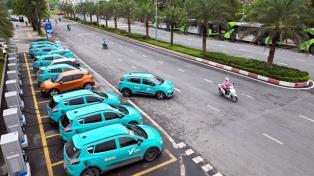
Hà Nội's vehicles using clean and green energy will be assigned license plates with different background colours from vehicles using other energy.
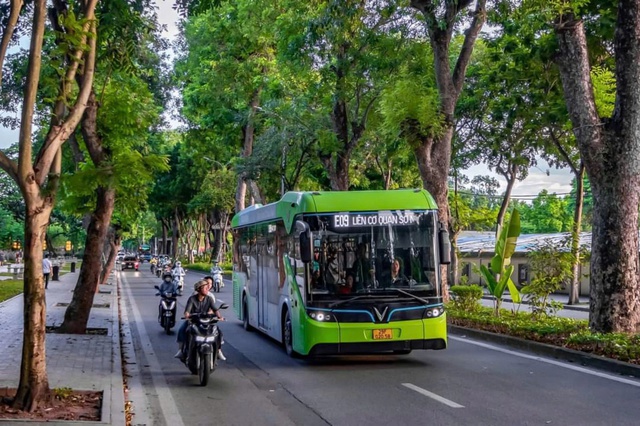
HÀ NỘI — Hà Nội will introduce licence plate backgrounds with a different colour for vehicles using clean and green energy, distinguishing them from vehicles using other forms of energy.
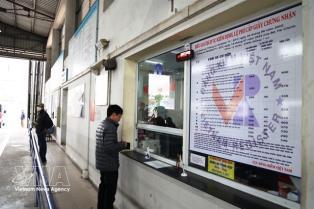
These vehicles will also be fitted with QR codes identifying them as green vehicles, integrated into the vehicle registration system and the electronic toll collection (ETC) system.
These measures are part of a group of initiatives focused on transitioning to green transportation and protecting air quality, according to a plan to implement solutions addressing environmental pollution across the city issued by the People’s Committee of Hà Nội.
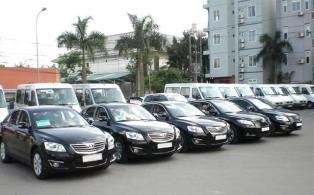
The city will also develop plans to manage and control vehicles entering and exiting Ring Road 1 through measures such as inspections for clean and green energy vehicles, traffic organisation, surveillance camera systems and regulations on the colour of licence plate backgrounds for clean and green energy vehicles.
In addition, Hà Nội will review suitable locations and land funds to promptly complete planning schemes for the development of an electric vehicle charging station network and battery-swapping stations.
It will also issue guidance on investment and construction procedures for charging stations and battery-swapping facilities, and study pilot plans for building these at appropriate locations, ensuring compliance with existing processes, standards and technical regulations.
Hà Nội will also review the city’s power transmission network to upgrade power lines, ensuring sufficient electricity supply for charging stations and charging poles, in line with demand for the construction of such infrastructure.
In the initial phase, these measures will be implemented within Ring Road 1, with gradual expansion in accordance with the approved roadmap for transitioning to clean energy vehicles.
Previously, Hà Nội announced a draft resolution of the municipal People’s Council on regulations for implementing low-emission zones in the capital.
The new draft proposes expanding the scope of low-emission zones to Ring Road 2 starting in 2028, instead of 2031 as previously planned.
Resolution No. 47 stipulates that during the 2025–30 period, Hà Nội will pilot low-emission zones in certain areas of the former Hoàn Kiếm and Ba Đình districts, while encouraging other localities to establish low-emission zones.
The revised draft also shortens the roadmap by five years and significantly expands the scope compared with the initial plan. The low-emission zones will be developed within Ring Road 1 from July 1, 2026. The zone will extend to Ring Road 2 from January 1, 2028, and Ring Road 3 from January 1, 2030.
At the same time, wards and communes are encouraged to voluntarily implement low-emission zones.
A low-emission zone is a designated area within a city where air pollution levels are high. Vehicles operating in these zones must meet strict emission standards. Vehicles that fail to meet the standards will be restricted or required to pay fees.
Areas designated as low-emission zones will be required to apply traffic and economic measures to reduce air pollution.
Air pollution typically begins around October and lasts until April of the following year, concentrated at locations with heavy traffic density and numerous production facilities. — VNS