Hà Nội targets to become international logistics hub
Of 25 planned logistics infrastructure projects, four have received investment approval, including the Đức Thượngg Inland Container Depot (ICD), the Cổ Bi ICD, a Grade I logistics center at Nội Bài International Airport and a Grade II logistics center in Phú Xuyên.
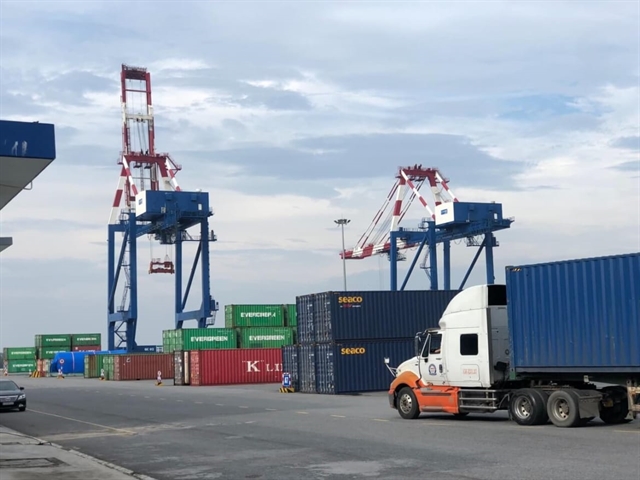
HÀ NỘI — Hà Nội aims to develop into an international logistics hub by expanding transport infrastructure, improving regulatory coordination and strengthening regional connectivity under the country's national logistics strategy, officials said.
The initiative forms part of Việt Nam's Logistics Services Development Strategy for 2025-2035, with a vision to 2050, as the Government seeks to improve supply chain efficiency and support long-term economic growth.
At a meeting on Tuesday between the Ministry of Industry and Trade's Agency of Foreign Trade and Hà Nội Department of Industry and Trade, officials said the city must address longstanding bottlenecks in infrastructure, planning and data integration before it can compete with leading regional logistics centres.
Hà Nội currently has about 400 logistics warehousing companies operating across nearly 100 hectares of land, according to Vũ Đức Quỳnh, deputy head of the Trade Management Division at the Hà Nội Department of Industry and Trade.
Most facilities, however, remain small and fragmented, while the city continues to face shortages of specialised warehouses, cold-storage facilities, smart warehouses and modern distribution centers, Quỳnh said.
Of 25 planned logistics infrastructure projects, four have received investment approval, including the Đức Thượng Inland Container Depot (ICD), the Cổ Bi ICD, a Grade I logistics centre at Nội Bài International Airport and a Grade II logistics centre in Phú Xuyên. Authorities are also reviewing proposals for additional logistics parks, inland waterway ports and regional distribution centers.
Officials said logistics development continues to be constrained by fragmented regulations, insufficient integration between logistics, transport and industrial infrastructure, and the absence of a unified logistics data platform. Businesses have also identified transport infrastructure, commercial facilities, access to financing and customs efficiency as key constraints.
Nguyễn Thế Hiệp, deputy director of the Hà Nội Department of Industry and Trade, said logistics would remain one of the city's strategic development priorities.
He said Hà Nội had asked the Ministry of Industry and Trade to provide guidance on implementing national policies covering green logistics, digital logistics and regional supply-chain integration, while supporting the development of dedicated policy mechanisms, major logistics infrastructure and digital platforms serving import-export activities.
Trần Thanh Hải, deputy director general of the Agency of Foreign Trade, said Hà Nội's logistics sector had yet to reflect the city's economic importance.
"Hà Nội has yet to develop logistics centres capable of serving as major growth engines for the capital and reinforcing its role as the economic gateway for northern Việt Nam," Hải said.
He said achieving international logistics hub status would require more than physical infrastructure investment, calling for institutional reform, stronger logistics companies, workforce development, digital transformation, green transition and more efficient freight movement.
The Ministry of Industry and Trade will support Hà Nội through national initiatives, including the development of a nationwide logistics center network, a national logistics database and policies aimed at strengthening domestic logistics enterprises, Hải said.
Bùi Nguyễn Anh Tuấn, deputy director general of the Domestic Market Management and Development Agency, urged the city to accelerate planning reviews, expand logistics infrastructure, promote digitalisation and decarbonisation, develop logistics talent and establish an inter-agency working group to coordinate future logistics policies.
Officials at the meeting agreed that developing Hà Nội into an internationally competitive logistics hub would require sustained coordination between central and local authorities, alongside continued investment in infrastructure, regulatory reform and regional connectivity. VNS