Hà Nội takes steps to turn 50 investment deals into concrete projects
Under the plan recently issued by the municipal People’s Committee, the capital city has ordered agencies to assign clear responsibilities, deadlines and deliverables for each memorandum of understanding, with priority given to initiatives that can produce results this year and support the city's digital and sustainable development goals.

HÀ NỘI — Hà Nội is taking action to turn 50 investment and cooperation agreements made at its landmark investment conference in June into concrete projects for new infrastructure, technology and services that can support the capital's long-term growth.
Under a plan recently issued by the municipal People’s Committee, the capital city has ordered agencies to assign clear responsibilities, deadlines and deliverables for each memorandum of understanding (MoU), with priority given to initiatives that can produce results this year and support the city's digital and sustainable development goals.
The move, aimed at ensuring the agreements go beyond commitment on paper and are carried out in a coordinated and substantive manner, is part of broader push to realise investment as the capital city targets faster economic growth and seeks to position itself as a technology and innovation hub.
The MoUs were signed at a June 29 conference unveiling Hà Nội's master plan with a 100-year vision and promoting investment. It was held with partners in four major areas, including infrastructure and urban development, science, technology and innovation, finance and investment promotion, as well as culture, healthcare and education.
Hà Nội is requiring each MoU to be translated into a detailed implementation plan with the lead agency, coordinating bodies, counterparties, expected outputs and completion dates to be identified. Municipal agencies must work with partners to select priority tasks for implementation in 2026, particularly projects capable of generating early results or creating spillover effects.
The plans must be clear on who is responsible, what needs to be done, when it must be completed, what the output will be and who is accountable, the municipal People’s Committee said.
For Hà Nội, converting investment commitments into productive capacity is increasingly important as the capital city seeks to accelerate growth.
With infrastructure and urban development commitments, successful implementation of these projects could help support Hà Nội's ambition to build a more modern and integrated metropolitan area.
In science and technology, the focus is on creating new growth engines through innovation and digitalisation, while finance and investment promotion are aimed at expanding the city's ability to mobilise domestic and international capital.
Healthcare, education and culture form the fourth pillar, linking investment promotion with improvements in public services and quality of life.
Push for reforms to facilitate investment
Hà Nội’s investment strategy is entering a new development phase, shifting from securing commitments to demonstrating that its reforms and infrastructure can enable those commitments to become projects on the ground.
Efforts have been made to strengthen its competitiveness through a combination of institutional reform, infrastructure investment and more targeted investment promotion.
Carrying out the amended Capital Law and the capital city’s master plan is expected to give the capital greater room to address bottlenecks involving planning, land and administrative procedures.
To improve the investment climate, the city has been cutting and simplifying procedures together with digitalisation to make land and investment information available through online platforms.
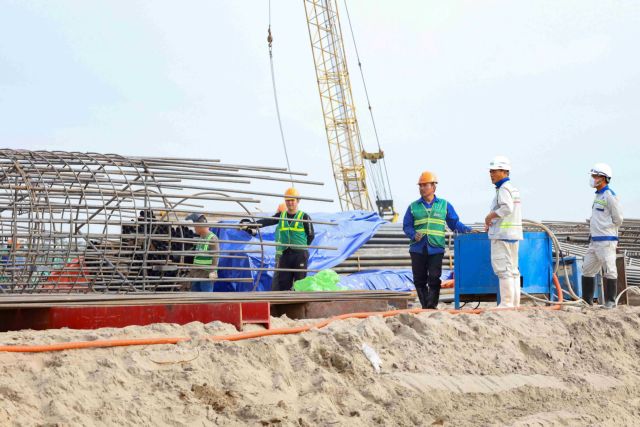
Another focus is accelerating major transport infrastructure, including Ring Road 4, new bridges across the Red River and urban railway projects, alongside digital infrastructure, data centres and high-tech industrial zones to improve connectivity, lower logistics costs and create new development space for industrial and technology investment.
The capital city is targeting sectors such as semiconductors, AI and biotechnology as it seeks to diversify its growth engines, with Hòa Lạc Hi-Tech Park positioned as a centre for research, development and high-tech investment.
Investment promotion is shifting from a largely passive approach towards targeted outreach in key markets including Japan, the Republic of Korea, Taiwan (China), North America, the EU and Singapore.
Lê Trung Hiếu, deputy director of the Hà Nội Department of Finance, said the city will step up investment promotion through digitalisation, making information on investment incentives, policies and projects seeking capital available more quickly and transparently to domestic and foreign businesses.
The department will focus on resolving administrative hurdles and speeding up digital transformation to improve the investment and business environment.
Economist Trần Đình Thiên, former head of the Vietnam Institute of Economics, said that a city's competitiveness depends not only on tax incentives or land costs, but also on the quality of its living environment and development ecosystem.
The network of universities and research institutes gives Hà Nội an advantage in developing skilled workers, while the links between government, universities and businesses help better match training with international labour market requirements, Thiên said.
The city is also seeking to expand its start-up and innovation ecosystem through co-working spaces, innovation centres and venture capital funds.
Official statitistics show that Hà Nội attracted US$133.2 million in foreign investment in July. From January to July, the capital city attracted $3.4 billion in FDI, down 9.7 per cent from a year earlier and equivalent to 75.3 per cent of its full-year target. — VNS