Hà Nội aims to build public EV charging stations
The shared-use charging model is part of a broader effort to promote green mobility in Hà Nội, as the city will pilot low-emission zones within Ring Road 1 starting from July 1, 2026 and expanding through 2030 to improve air quality.

HÀ NỘI — Hà Nội is pushing ahead with plans to develop public electric vehicle (EV) charging stations compatible with all manufacturers to promote fair competition in the growing EV market, while increasing convenience for users.
The shared-use charging model is part of a broader effort to promote green mobility in Hà Nội, as the city will pilot low-emission zones within Ring Road 1 starting from July 1, 2026 and expanding through 2030 to improve air quality.
City authorities plan to gradually restrict the use of fossil fuel-powered vehicles that cause high levels of pollution, particularly petrol-powered motorcycles and older commercial transport vehicles.
Deputy Director of the municipal Department of Construction Đào Việt Long said that Hà Nội is preparing a legal framework along with support mechanisms, infrastructure and traffic organisation, with a clear roadmap to ensure the transition is carried out smoothly.
Under a draft resolution on the transition to green transport, the city is creating numerous measures to support both residents and businesses.
Charging up
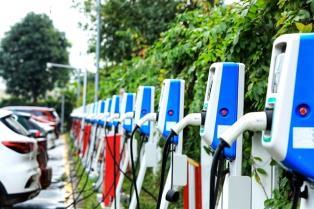
In terms of infrastructure, Long said Hà Nội has identified the development of EV charging stations as a decisive factor for green mobility.
The draft resolution states that at least 15 per cent of parking spaces at existing facilities within Ring Road 3 must be equipped with charging stations by 2030, while new developments will be required to allocate a minimum of 30 per cent of parking spaces for charging.
All charging stations will also be required to serve vehicles from all manufacturers, rather than being exclusive to any single brand, to ensure fairness and avoid wasteful use of urban space, Long noted.
He said the city has identified 110 potential locations for the installation of public charging stations within Ring Road 3. Most of these sites meet technical requirements, but the biggest challenge at present is the lack of national technical standards for charging stations, he added.
The city has called for early issuance of technical standards for charging stations at parking spaces or in the basements of buildings, according to Long.
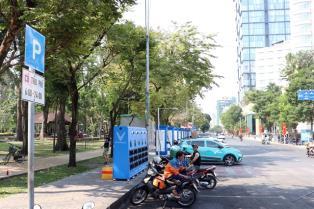
Battery-swapping stations are also planned for two-wheeled EVs, to shorten charging time.
People-centred
Long stressed that citizens and businesses are placed at the centre of Hà Nội’s green transition, with all policies designed to create a safer, more sustainable and better living environment for the entire community.
He said that for residents switching from petrol-powered to electric vehicles, the city would provide financial support by covering up to 20 per cent of the vehicle’s value, capped at VNĐ5 million (US$190) per unit.
This support will be higher for low-income earners, with up to 100 per cent of the vehicle’s value for poor households covered by the city.
Hà Nội officials are also working with manufacturers for further price reductions and promotions to encourage the transition.
For passenger and cargo transport operators and public utility service providers, the city has proposed a subsidy of 30 per cent of loan interest for up to five years, while allowing access to preferential funding from the Hà Nội Development Investment Fund and the Environmental Protection Fund.
Registration fees would also be provided for these customers, including taxis and buses converting to EVs.
City authorities are also considering preferential parking rates for green vehicles, with plans to exempt companies operating public electric bicycles and electric motorbikes from fees for the use of roads and pavements for up to five years.
At the same time, the capital will expand its policy of free public transport tickets for students and workers in industrial zones.

Phased roadmap
The city is developing a phased roadmap for conversion to EVs, he said.
For two-wheeled vehicles used for transport service business, including app-based ride hailing, the draft targets a 20 per cent conversion rate by 2027, 50 per cent by 2028 and 100 per cent by 2030.
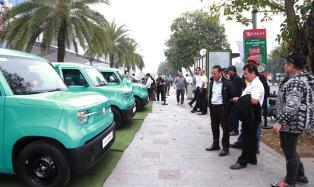
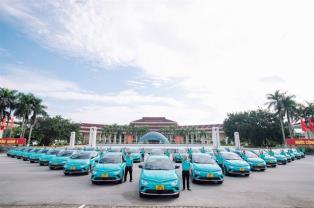
For taxis and passenger cars with up to eight seats, including app-based ride hailing, all newly purchased and replacement vehicles must use clean energy from June 1, 2026. The draft aims for a conversion rate of 50 per cent before the beginning of 2028 and 100 per cent before 2030.
Long said the city will not require all vehicles currently in operation to switch to EVs immediately, adding that vehicles that are operating normally, remain within their service life and meet technical standards will continue to be allowed.
The phased roadmap for conversion will allow transport operators time for their transition, he said.
The city will only consider further restrictions on other fossil fuel-powered vehicles once the urban railway system is fully completed and able to adequately meet residents’ travel needs after 2035, Long said.
Transport expert Phan Lê Bình said that developing public charging infrastructure is necessary to ease fire-safety concerns related to charging EVs in apartment buildings.
Statistics show that there are more than eight million vehicles in Hà Nội, including about 6.9 million motorcycles, with road transport accounting for an estimated 58–74 per cent of total air pollution. — VNS