Firms urged to turn corporate culture into competitive asset
Vietnamese businesses should preserve traditional strengths while adapting to the demands of an increasingly competitive market.
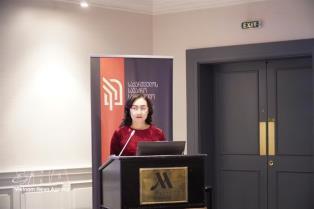
HÀ NỘI — Corporate culture is emerging as a key source of competitive advantage for businesses, with trust, innovation and responsible technology adoption seen as essential to strengthening competitiveness while preserving national identity, heard a forum on October 13.
Speaking at the Vietnam Corporate Culture Forum 2026 in Hà Nội organised by Văn Hóa (Culture) newspaper, Deputy Minister of Culture, Sports and Tourism Nguyễn Huy Dũng cited a message delivered by General Secretary and State President Tô Lâm that while the economy determines how fast a country can develop, culture determines how far it can go.
He outlined eight core values for businesses navigating a new era of development, including integrity, respect for the law, customer value, talent development, continuous innovation and responsible use of artificial intelligence (AI) as well as leadership accountability and preservation of Vietnamese cultural identity, and a commitment to aligning business growth with the long-term interests of the country and its communities.
Dũng said businesses must demonstrate their values through concrete actions, particularly when faced with a choice between short-term gains and maintaining commitments.
Nguyễn Anh Vũ, editor-in-chief of Culture newspaper, said corporate culture is increasingly important as businesses adopted digital technologies, automation and AI.
Technology alone could not deliver meaningful transformation, he said, stressing that companies also needed a culture of learning, collaboration, experimentation and accountability.
A company's lasting competitive advantage lays in how its employees worked together, how managers made decisions and how it treated customers, workers, business partners and society, Vũ said.
Trần Đình Thiên, former director of the Vietnam Institute of Economics, said businesses should preserve traditional strengths while adapting to the demands of an increasingly competitive market.
He said qualities such as hard work, flexibility and self-reliance could help businesses grow, but narrow thinking, a focus on short-term gains and a reluctance to compete could hold them back.
Thiên called for a modern corporate culture built on entrepreneurial spirit and patriotism, fair competition and the best of Vietnamese cultural traditions. He said businesses should retain values that remain relevant while embracing new ideas and a broader international outlook.
He urged improvements to the institutional environment, including greater transparency in property rights and the rights of businesses and workers, to foster a fairer and more competitive economy.
Chử Đức Hoàng, head of the National Technology Innovation Fund's office under the Ministry of Science and Technology, said innovation needs to become part of everyday business operations, supported by leadership commitment, employee learning, effective management, responsible experimentation and cooperation with partners.
He said Innovation should not come at the expense of customer trust or workers' rights, adding that technology can only deliver real value when businesses also improve their management, train their workforce and adapt their decision-making processes.
Hoàng called on businesses to set clear goals for innovation, test new ideas, provide the necessary resources and measure results to turn innovation into a regular practice.
Lê Quang Vũ, director of Blue C Content Development JSC, said innovation could begin with small improvements to workflows, customer service and cooperation between teams.
A study published in late 2025 by the Enterprise Development Institute under the Vietnam Chamber of Commerce and Industry and Blue C, based on a survey of 505 businesses, found that the average corporate culture implementation maturity score reached 43.84 out of 100, equivalent to Level 4 on a six-level scale. This was an increase of 4.12 points from 2024.
However, only 48.51 per cent of surveyed businesses reached Level 4 or above, while just 27.9 per cent achieved one of the two highest maturity levels.
Mạc Quốc Anh, secretary general of the Hanoi Small and Medium Enterprises Association, urged companies to identify one cultural issue directly affecting their operations and set clear responsibilities, deadlines and performance measures for improvement.
The Ministry of Culture, Sports and Tourism is promoting the development of cultural industries, sports economy and tourism economy.
The ministry has submitted a draft law on cultural industry development to the National Assembly, while a policy adopted by the Politburo calls for at least 2 per cent of the state budget to be allocated to culture from 2026. — VNS