EVFTA sets exemplary trade deal, more negotiations underway to facilitate trade, diversify supply chains: EU Commissioner
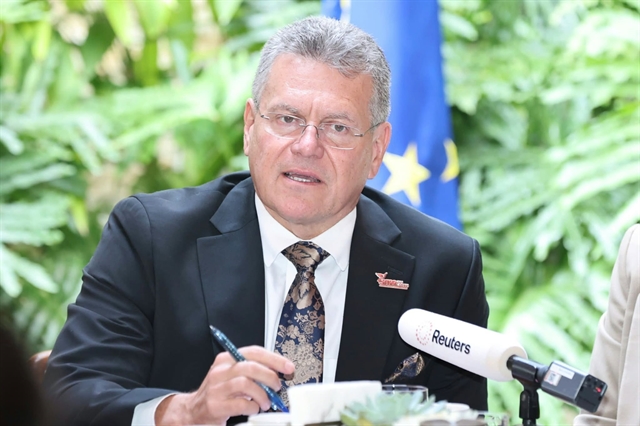
EU Commissioner for Trade and Economic Security Maroš Šefčovič during his visit to Hà Nội for the second EU-CPTPP Partnership Dialogue shares about efforts to accelerate practical cooperation with CPTPP partners, particularly in strengthening supply-chain resilience, improving logistics and facilitating trade for businesses, especially small and medium-sized enterprises.
The European Union (EU) considers the EU-Vietnam Free Trade Agreement (EVFTA) an exemplary agreement demonstrating how free trade deals can generate stronger trade and investment ties, while seeking to expand cooperation with the Comprehensive and Progressive Agreement for Trans-Pacific Partnership (CPTPP) countries through further negotiations on digital trade and trade facilitation.
EU Commissioner for Trade and Economic Security Maroš Šefčovič during his visit to Hà Nội for the second EU-CPTPP Partnership Dialogue discusses efforts to accelerate practical cooperation with CPTPP partners, particularly in strengthening supply-chain resilience, improving logistics and facilitating trade for businesses, especially small and medium-sized enterprises.
What are the key outcomes of the second EU-CPTPP Partnership Dialogue and how do the two sides plan to advance their cooperation?
The partnership between the EU and CPTPP countries is a very important partnership, because it brings together 39 countries across five continents, accounting for about 40 per cent of global trade and 30 per cent of global GDP, with more than one billion people living in the countries involved.
We very much appreciate the opportunity to accelerate cooperation between the EU and CPTPP countries and strengthen the practical elements of our partnership. We had very good discussions on how to advance this cooperation further.
One of the most important outcomes was our agreement to establish an early warning mechanism to strengthen supply-chain resilience. We have seen over the past couple of years how vulnerable supply chains can be, so we need to pay much greater attention to ensuring that they function properly.
We also devoted considerable attention to improving logistics and trade facilitation among our economies, with a focus on making business as simple as possible, particularly for small and medium-sized enterprises (SMEs).
Another area where I was very encouraged by the interest and support was the idea of developing digital trade agreements between the CPTPP countries and the EU.
These are practical measures that can make trade smoother and easier for businesses on both sides.
What role do you see Việt Nam playing in strengthening cooperation between the EU and CPTPP countries, particularly amid current geopolitical and economic uncertainties?
Việt Nam is a very important partner for us. Viêt Nam was the first country in the ASEAN region with which we concluded a comprehensive free trade agreement, the EVFTA.
Since the agreement entered into force, bilateral trade has grown significantly and is now approaching 80 billion euros (US$87.8 billion). This demonstrates the considerable benefits that a well-designed and effectively implemented free trade agreement can bring to both sides. I think Việt Nam is doing particularly well because it exports more to Europe than we export to Việt Nam.
Việt Nam also plays an important role in our efforts to diversify global supply chains. The EU wants to have supply chains that are as diversified as possible, and we believe Việt Nam can make a significant contribution to achieving this objective.
During my discussions with Vietnamese counterparts, we also addressed trade barriers that, if removed, could help further expand bilateral trade and create opportunities for European investment, particularly in infrastructure, transport, telecommunications and renewable energy.
These are areas of clear interest to both Việt Nam and the EU, where European companies has strogn expertise and technological capabilities.
The EU and CPTPP countries have agreed to establish an early warning mechanism for supply-chain resilience. How it will work and what areas it will focus on?
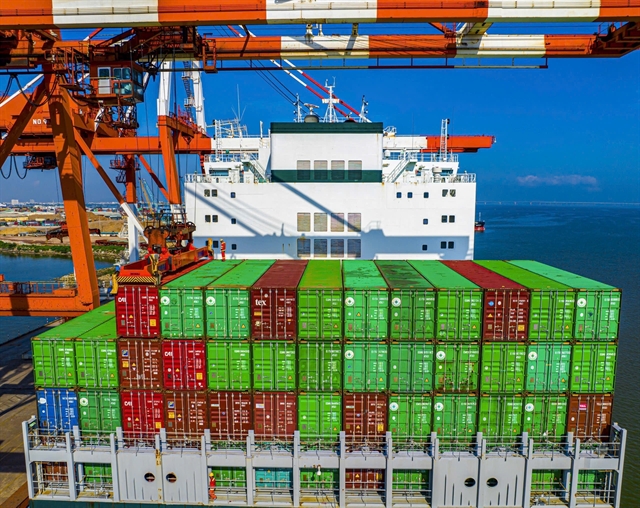
We have learned over the past few years how vulnerable supply chains can be and how they can be weaponised. This has made it essential for us to pay much closer attention to their resilience and proper functioning.
The early warning mechanism will involve close cooperation with our CPTPP partners to anticipate potential supply disruptions, particularly involving critical minerals and essential industrial components.
During my visit to Japan, I had the opportunity to see the work of the Japan Organization for Metals and Energy Security (JOGMEC), which provides an interesting model for anticipating potential shortages of critical minerals through close cooperation with industry.
We would like to draw on such experience to ensure that our industries have reliable access to the materials and components they need.
The objective is to identify potential risks early and strengthen cooperation so that businesses can maintain production and supply chains can continue functioning smoothly.
The EU has also proposed expanding digital trade cooperation with CPTPP economies. What practical benefits could this bring to businesses, particularly SMEs?
We were encouraged by the interest and support for developing digital trade agreements between the EU and CPTPP countries.
The EU already has digital trade agreements in place with Singapore, Canada and the Republic of Korea.
We therefore agreed to start with practical areas that can deliver visible benefits to businesses, including electronic invoicing, electronic signatures and electronic customs declarations.
These tools can make cross-border trade simpler, faster and less costly, particularly for SMEs, which often face greater difficulties in dealing with administrative procedures and different regulatory requirements.
Our discussions also covered logistics and trade facilitation, with the broader objective of making it as easy as possible for businesses to trade across our markets.
How can further negotiations between EU and CPTPP countries facilitate region-to-region trade and bring practical benefits to businesses?
We see considerable merit in strengthening region-to-region cooperation.
We would like to work on a digital trade agreement with CPTPP countries, and we see similar interest from ASEAN. We would also like to congratulate ASEAN countries on agreeing on digital trade principles, which provide a very solid basis for our discussions on digital trade.
We discussed that we should start with practical areas that are visible to economic operators, including SMEs, such as electronic invoicing, electronic customs declarations and the wider use of digital tools to facilitate trade.
These measures can make trade much easier for businesses.
We also discussed different permits for agri-food products and other barriers affecting trade between countries. These are normal issues for trading partners to discuss, and we want to use this partnership to address them as quickly as possible.
The objective is to increase trade and create more jobs for people across the region.
From the example of Việt Nam, we can see that the increase in exports and trade volumes has been broad. The EVFTA is a good example of how, when countries sign free trade agreements, they need to be serious about implementing them effectively to ensure that all parties involved benefit from the agreements.
This is a major objective as we seek to complete negotiations with our remaining partners, including Thailand, the Philippines and Malaysia.
We believe that free trade agreements, combined with stronger region-to-region cooperation, can create more opportunities for businesses, boost trade and investment, and bring greater benefits to all parties involved. — VNS