Ethanol imports to reach $1 billion in first phase of E10 biofuel rollout
The Ministry of Industry and Trade (MoIT) estimated when the rollout takes effect, ethanol demand will be approximately 92,000-100,000cu.m per month.
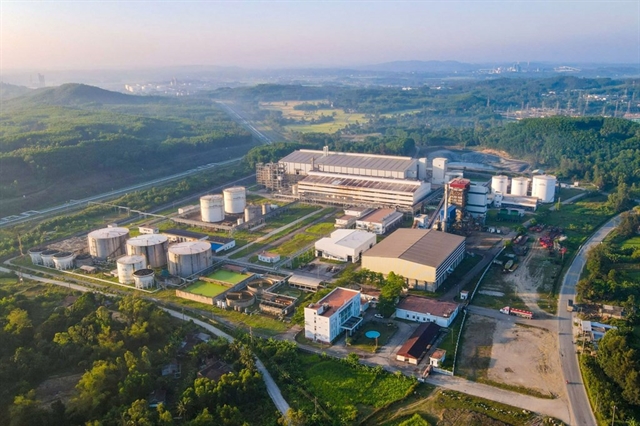
HÀ NỘI — Given the current limited domestic ethanol supply, Việt Nam may have to spend US$1 billion yearly to import the chemical to produce enough E10 biofuel for local demands.
The Government has approved a nationwide mandatory rollout of E10 biofuel – a low-level blend composed of 10 per cent ethanol and 90 per cent gasoline – from June 1 this year.
Local petroleum producers have been accelerating the completion of blending infrastructure to provide E10 for the market, but their output remains limited.
The Ministry of Industry and Trade (MoIT) estimated that when the rollout takes effect, ethanol demand will rise to approximately 92,000-100,000cu.m per month. Meanwhile, total domestic ethanol output is currently only about 25,000cm.m per month.
This means Việt Nam will have to import approximately 75,000cu.m of ethanol per month for at least the first year of the rollout.
Đào Duy Anh, deputy director of the MoIT’s Department of Innovation, Green Transformation and Industrial Promotion, said that Việt Nam currently has six ethanol plants, but most of them were built many years ago. Some of the plants were even previously listed as underperforming projects and required lengthy restructuring.
Only about 2-3 plants have maintained relatively stable operations, while others are still in the process of restarting or converting technology, Anh said.
According to Anh, even when domestic plants operate at maximum capacity, they only meet about 40-50 per cent of ethanol demand for use in biofuels. Importing ethanol in the initial phase is thus almost mandatory if Việt Nam wants to ensure an adequate supply of E10 for the market.
Ethanol currently has a fairly abundant supply worldwide from major markets such as the US, Brazil, India, China, Thailand and the Philippines. This is considered a factor that helps alleviate concerns about the risk of supply shortages in the initial phase of E10 rollout.
With current gasoline consumption at around 10 million tonnes, the implementation of E10 could increase Việt Nam's demand for ethanol imports tenfold, to about one million tonnes of ethanol per year, equivalent to a value of approximately US$1 billion.
In the future, if Việt Nam continues to increase the ethanol blending ratio from the current 10 per cent to 20 per cent, as is already being done in the Philippines, Thailand, the US, Brazil and some European countries, the potential for importing ethanol from the US alone could reach approximately $2 billion.
This is equivalent to about 17 per cent of the current value of goods imported from the US into Việt Nam. — BIZHUB/VNS