Education in the age of AI: ensuring people remain in control
by Lê Hương
Artificial intelligence is reshaping teaching and learning, prompting schools and universities to rethink curricula, assessment and digital safety while ensuring technology supports, rather than replaces, human thinking.
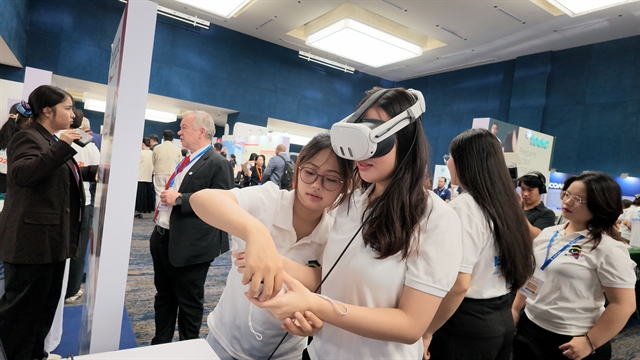
As AI becomes increasingly integrated into education, institutions are rethinking how students learn, how teachers teach and how academic performances are assessed.
The challenge is no longer simply whether to adopt AI, but how to use it responsibly while preserving students' critical thinking, creativity and ability to interact with others.
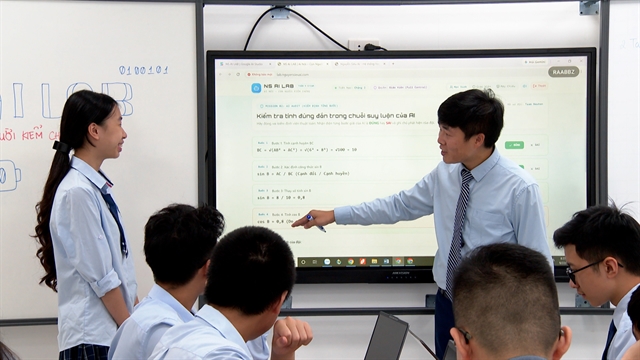
At Nguyễn Siêu School in Hà Nội, AI adoption has gone hand in hand with efforts to establish clear rules for its use and protect students from potential risks.
Nguyễn Thị Minh Thúy, headmistress of the school, said it had adopted a digital ecosystem and AI applications, particularly chatbots, while training teachers to use the technology effectively.
"We have also introduced codes of conduct and ethical guidelines for teachers and students, alongside revisions to student regulations," she said.

The school has developed rules tailored to different age groups, specifying when technology can be used in lessons and when students should return to more traditional forms of learning.
"Excessive dependence on technology could undermine students' creativity, teamwork and ability to interact with others," she added.
"Protecting children's digital wellbeing and personal information has therefore become an important part of the school's approach."
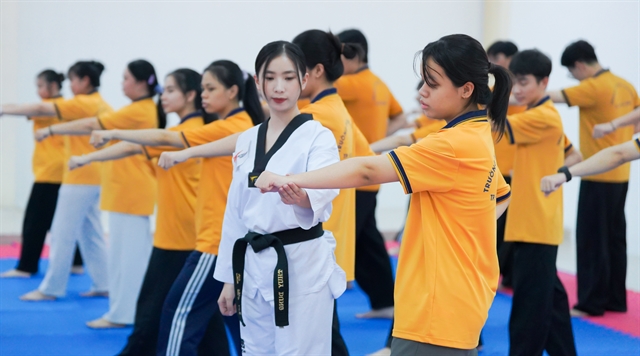
Alongside digital learning, the school has introduced after-school sports activities to encourage students to spend time away from screens and strengthen social connections.

Rethinking teaching and assessment
At Gia Định University, AI integration has prompted changes across the curriculum, teaching methods and assessment.
Phạm Văn Song, president of the university, said the institution had redesigned its training programmes to incorporate AI and technology across subjects.
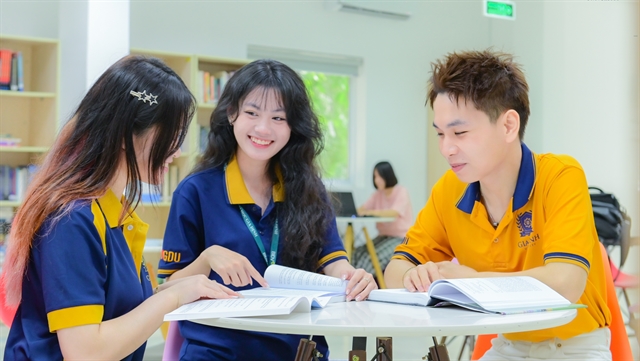
"AI is being used to support students and lecturers, while examination and assessment methods are being revised to account for its growing role in education," he said.
"One challenge is ensuring fairness when students use AI in their learning and lecturers use it in teaching. Institutions must develop appropriate assessment methods while ensuring graduates acquire the skills and competencies required by the labour market."
Song said the university was also developing an intelligent management system using AI to enable school leaders to manage operations in real time.
However, access to technology alone is insufficient. Clear institutional regulations and a shared understanding of their purpose are essential to ensure teachers and students use AI appropriately.
AI as a tool, not the goal
The questions facing Vietnamese educators are shared internationally, according to Stefan Hermans, Director for Competitiveness, Talent Mobility and International Cooperation at the European Commission's Department for Education, Youth, Culture and Sports.
"It is really important to have quality education and access to quality education, and that in the time of AI, that will not change, it actually will even be more important to have this sort of development, educational development, and a quality of investment in education that we will have," he added.
"What matters is, really a lot, is that people stay in control."
For Hermans, this means ensuring AI remains a tool for learning and teaching rather than something that dictates the educational process.
Fad Abdul Khaled, Provost of the University of Massachusetts Amherst, said educators needed to reconsider teaching objectives as AI became more capable of performing tasks students had traditionally been expected to master themselves.
He said: "Before there were calculators, we wanted students to learn how to do addition, subtraction, multiplication by hand, and then the calculator came in.
"The goal now is not to teach them to do basic maths, but to ask them to do more elevated teaching and learning, to have higher critical thinking skills.
"So what we need to figure out is, how can we take the AI available to us and make our learning objectives of a higher level so that AI becomes a tool for our students rather than the goal? That's a really good way for us to think about AI in education."
Khaled also highlighted concerns about academic integrity and safety. If students use AI to write assignments, educators must consider whether they have actually developed the skills being assessed. Sharing personal information through AI systems also raises privacy concerns.
At the same time, students need to understand how AI works and how to use it in their daily lives and future careers.
Khaled welcomed Việt Nam's efforts to address these questions through dialogue and international cooperation, saying partnerships could help the country develop effective approaches to integrating AI into teaching and learning.
The priority, he said, should be to use AI efficiently, safely and ethically to improve education and prepare students for the workplace.
Strengthening international cooperation
International partnerships could also help Việt Nam respond to wider changes in education.
Hermans said cooperation between Việt Nam and the European Union had already created opportunities for students and educational institutions.
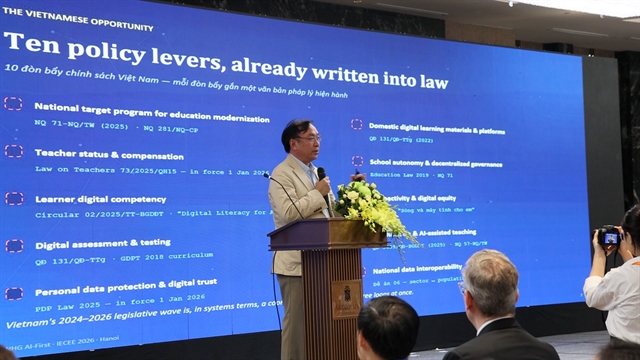
Through programmes including Erasmus+, about 6,800 students had benefited from mobility opportunities, while around 100 partnerships and cooperation projects had been established between Vietnamese and European institutions, he said.
EU Ambassador to Việt Nam Julien Guerrier said the Minister of Science and Technology was scheduled to visit Brussels on October 22, 2026, to sign a letter of intent with the European Commission's Executive Vice-President responsible for education.
"The agreement would mark a new phase in bilateral cooperation and further internationalise Vietnamese education," he said.
Guerrier also highlighted Horizon Europe, the EU's research and innovation programme, as an avenue for universities, academics and researchers to participate in joint research projects with European counterparts.
As AI continues to change education, the experiences of Vietnamese schools and universities underline the importance of clear rules, teacher training and age-appropriate safeguards.
Technology may expand what students and teachers can do, but its value ultimately depends on how it is used. Keeping human judgement, critical thinking and students' overall development at the centre of education will remain essential as institutions adapt to the AI era. VNS