E10 petrol captures over 96% of market after one month of nationwide rollout
One month after Việt Nam rolled out E10 nationwide, the biofuel has captured more than 96 per cent of petrol consumption, with authorities reporting stable supplies, smooth market operations and early signs of improved air quality in Hà Nội and HCM City.
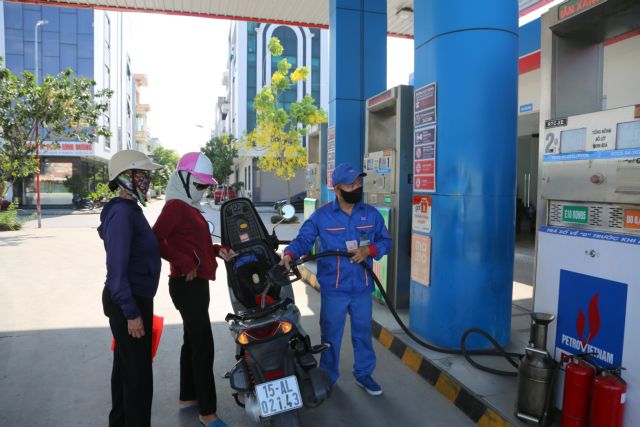
HÀ NỘI — Biofuel E10 has accounted for more than 96 per cent of petrol consumption after one month of nationwide implementation, with authorities reporting stable supplies, smooth market operations and early signs of improved air quality in major cities.
The figures were released at a seminar titled 'E10 petrol: science and national energy security' held in Hà Nội on Thursday, one month after Việt Nam officially introduced E10 nationwide under its roadmap to expand the use of cleaner transport fuels.
Dr Đặng Tất Thành from the Ministry of Industry and Trade (MoIT)'s Department of Innovation, Green Transition and Industrial Promotion said the rollout, which began on June 1, had proceeded as planned without supply disruptions.
"As of June 28, total nationwide biofuel consumption reached about 980 million litres, including 924 million litres of E10 and 56 million litres of E5," Thành said.
"E10 accounts for more than 96 per cent of total biofuel consumption. This is a very encouraging figure, confirming that the transition has taken place rapidly and that consumers have accepted and are using E10 as a conventional fuel."
According to the ministry, all petrol stations nationwide now sell E10. Petrolimex, PVOIL and 24 fuel wholesalers are supplying the fuel across the country, while 11 of the 26 wholesalers continue distributing E5 to meet consumer demand.
To support motorists, the ministry has also introduced the "Quanh tôi" (Near Me) application, enabling users to locate around 1,500 service stations nationwide that continue to sell E5.
"After one month of implementing the E10 blending roadmap, the market has operated smoothly, supplies have been fully secured and people have embraced biofuel as an ordinary transport fuel," Thành said.
The ministry also reported encouraging environmental results following the nationwide adoption of E10.
It worked with the Environmental Monitoring Centre to compare air quality data collected before the rollout in late May with measurements taken at the end of June.
The comparison found improvements in both Hà Nội and HCM City.
"In HCM City, key pollutants including CO, NO₂, NOx, O₃, SO₂ and fine particulate matter all declined significantly. In Hà Nội, both carbon monoxide and fine dust concentrations also showed a downward trend," Thành said.
"These initial results suggest that the nationwide use of E10 has contributed positively to improving air quality, helping create a healthier living environment and enhancing people's quality of life."
Associate Professor Phạm Hữu Tuyến, director of the Research Centre for Power Sources and Autonomous Vehicles at Hà Nội University of Science and Technology, said studies and practical experience showed E10 performed as well as conventional petrol while producing cleaner emissions.
He said ethanol contains about 3.4 per cent oxygen, allowing fuel to burn more completely inside the engine and reducing emissions of hydrocarbons (HC) and carbon monoxide (CO), two pollutants that affect both human health and the environment.
"The additional oxygen in E10 helps fuel burn more efficiently, reducing harmful emissions. This has also been reflected in the environmental monitoring results after E10 was introduced nationwide," Tuyến said.
The ministry stressed that the successful rollout was the result of years of preparation rather than a short-term policy change.
Thành noted that the Government first established a roadmap for biofuel blending in 2012, while the MoIT has worked with local authorities, businesses and relevant agencies since 2023 to assess supply capacity, study international experience and prepare for nationwide implementation.
He said E10 was not simply a new type of fuel but an important part of Việt Nam's green transition strategy.
Besides reducing dependence on fossil fuels through a 10 per cent ethanol blend, E10 promotes renewable energy use, helps cut greenhouse gas emissions and strengthens national energy security at a time of continued uncertainty in global energy markets.
The transition is also expected to create greater demand for domestic ethanol production, support the development of feedstock-growing areas, create jobs and contribute to local economic growth.
"The successful implementation of E10 also reaffirms Việt Nam's strong commitment to green growth, sustainable development and the circular economy," Thành said.
Regarding supply, he said domestic production and imports had fully met demand during the first month of implementation.
Around 103,000 cu.m of ethanol were available for blending in June, enough to produce more than one million cu.m of biofuel.
Việt Nam currently has three operating ethanol plants with a combined monthly capacity of about 18,000 cubic metres. A fourth plant in Đắk Nông is expected to begin operations later this month, increasing domestic production to more than 20,000 cu.m a month, or around 20 per cent of demand.
The remaining ethanol requirement is being met through imports from major producing countries and regional distribution hubs to ensure stable supplies. Meanwhile, the Nghi Sơn and Dung Quất refineries currently provide about 70 per cent of the base petrol used for E10 blending.
"After one month of implementing the E10 roadmap, supplies of both ethanol and base petrol have remained stable, sufficient and uninterrupted nationwide," Thành said.
"Even if demand for biofuel continues to grow, Việt Nam remains fully capable of securing adequate supplies to support the transition roadmap." — VNS