E10 gasoline supply remains stable, but dependence on imported ethanol poses key risk
In June, the total ethanol supply reached around 121,895cu.m, including 89,383cu.m of imports and 32,512cu.m from domestic producers.
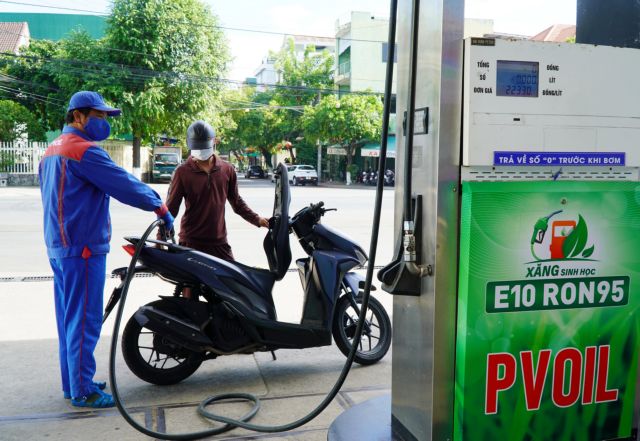
HÀ NỘI — Việt Nam's supply of E10 biofuel remains stable one month after its nationwide rollout, but the country's heavy reliance on imported fuel ethanol continues to expose the biofuel programme to supply disruptions, price volatility, exchange rate fluctuations and logistics risks.
That's according to a Ministry of Industry and Trade working group in charge of overseeing the implementation of Circular 50 on biofuel blending, which stated in a recent report that E10 gasoline has been sold nationwide since June 1 with no major disruptions reported.
Between June 1 and June 28, total biofuel consumption reached about 980 million litres. Of this, E10 accounted for about 94.3 per cent, while E5 made up the rest.
The report pointed out that more than 17,000 petrol stations nationwide have now switched to selling biofuel, primarily E10. Currently, 26 fuel wholesalers supply E10, while 11 continue to distribute E5.
According to the report, there are currently four ethanol plants in operation in Việt Nam, but only three –Quảng Nam Alcohol, Đồng Nai Alcohol and Dung Quất Biofuel – produce fuel-grade ethanol to blend into E5 and E10 gasoline.
These plants have a combined design capacity of 23,300 tonnes per month, but are currently operating at only 15,666 tonnes per month, or 67.2 per cent of capacity.
To meet demand, fuel distributors have continued to increase ethanol imports.
In June, the total ethanol supply reached around 121,895cu.m, including 89,383cu.m of imports and 32,512cu.m from domestic producers. In July, total supply is estimated at 103,700cu.m, of which 81,500cu.m will be imported.
The working group said that imported ethanol accounted for nearly 80 per cent of the total ethanol supply, highlighting dependence on imports.
Despite the successful rollout, the working group said that heavy dependence on imported ethanol leaves Việt Nam vulnerable to fluctuations in global ethanol prices, exchange rates, shipping costs and supply conditions.
Meanwhile, each of the nation's three ethanol plants also faces difficulties that must be tackled to increase the domestic supply.
The Quảng Nam plant depends entirely on imported corn feedstock and requires equipment upgrades and additional investment.
At the same time, the Đồng Nai plant faces planning difficulties because fuel distributors mainly sign short-term supply contracts, while the Dung Quat Biofuel plant continues to struggle with wastewater treatment issues, financial pressure, an unstable domestic feedstock supply and competition from lower-priced imported ethanol.
To strengthen energy security, the working group recommended maintaining strategic ethanol imports while gradually increasing the share of domestically produced ethanol. This can be done through long-term purchasing contracts, green financing, debt restructuring, development of sustainable cassava and corn growing areas and the possible revival of currently idle ethanol plants.
In another move, the Ministry of Industry and Trade has asked fuel wholesalers to fully meet their assigned minimum fuel supply quotas for 2026, diversify supply sources, maintain adequate inventories and ensure uninterrupted gasoline supplies throughout the second half of the year, particularly in remote and mountainous provinces. — BIZHUB/VNS