Draft investment law seeks to cut conditional business lines
The changes are expected to reduce compliance costs by about VNĐ175 billion (US$6.7 million) annually and save around 7,500 hours of administrative processing each year, according to the draft law.
HÀ NỘI — A draft law amending the Law on Investment proposes reducing the number of conditional business lines, a move expected to eliminate hundreds of business conditions and administrative procedures and lower compliance costs for companies.
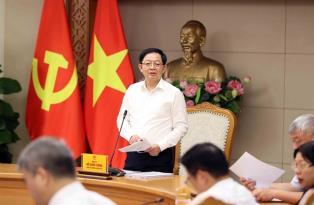
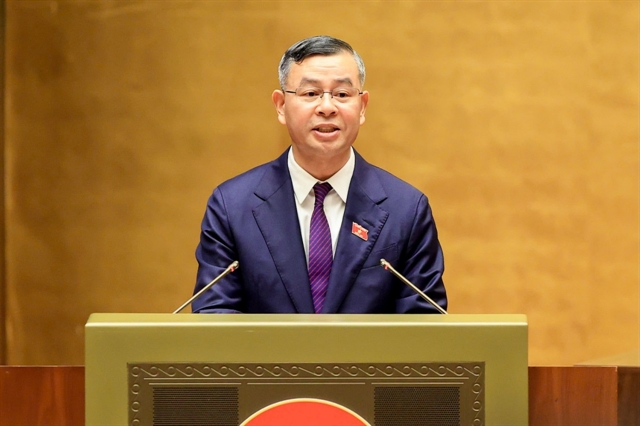
Presenting the draft amendments at the National Assembly (NA)'s first extraordinary session on Monday, Finance Minister Ngô Văn Tuấn said the proposal would remove 58 conditional investment and business lines and revise the scope of 16 others, eliminating an estimated 786 business conditions and 232 administrative procedures.
The changes are expected to reduce compliance costs by about VNĐ175 billion (US$6.7 million) annually and save around 7,500 hours of administrative processing each year, according to the draft law.
The Government said the reforms are intended to make it easier for businesses to invest and operate while shifting state management from pre-approval requirements to stronger post-inspection.
The draft law also proposes banning the commercial sale of nitrous oxide (N₂O) for inhalation outside approved medical, food technology, scientific research and testing purposes.
Tuấn said the buying, selling and use of N₂O had become increasingly widespread, posing risks to public health, social order and potential substance abuse despite existing regulations governing its production, trade and use.
The proposal follows the direction set out in Politburo Resolution No 72 and National Assembly Resolution No 173, which call for prohibiting the production and trade of addictive and health-harming substances. The draft law, however, would continue to allow the use of N₂O in medical treatment, food technology, scientific research and testing.
Despite the broad reduction in regulated lines, the draft proposes adding "activities of businesses authorised to provide visa services" to the list of conditional business sectors.
Minister Tuấn said the activity involves the collection and storage of personal and biometric data of Vietnamese citizens, creating potential risks to national security and public order that warrant stricter oversight.
The NA's Economic and Finance Committee backed the overall direction of reducing business conditions to improve the investment climate but called for further assessment of lines related to national defence, security, public safety and public health.
The committee said areas such as domestic water supply, gas distribution, unmanned aerial vehicle (UAV) operations, mineral mining, port operations and priority vehicle signalling involve significant public risks, and any shift from pre-approval to post-inspection should only proceed after alternative regulatory mechanisms have been proven effective.
Committee chairman Phan Văn Mãi said reforms should be implemented under an appropriate roadmap to avoid regulatory gaps in high-risk lines.
The committee also requested a more comprehensive assessment of the proposal to regulate visa service providers, including its impact on the investment environment, the country's international commitments and potential barriers to market entry.
It urged the drafting agency to study international practices to ensure the new requirement remains consistent with the country's broader agenda of reforming business conditions and facilitating cooperation with foreign diplomatic and consular missions. — VNS