Deputy PM calls for forestry planning to protect livelihoods
After five years of implementation, the existing plan had produced positive results — but new requirements, including the country's goal of sustaining double-digit economic growth starting this year, made updates necessary.
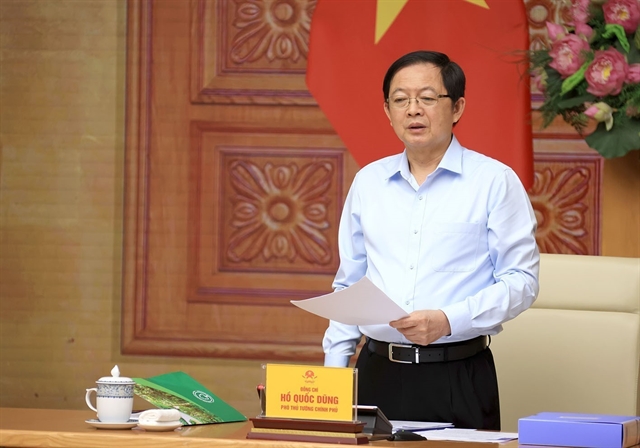
HÀ NỘI — Forestry plans must improve the livelihoods of people living in forested areas while balancing economic development, social welfare and environmental protection, Deputy Prime Minister Hồ Quốc Dũng said on Wednesday.
Dũng, who chairs the council tasked with reviewing the National Forestry Plan for the 2021-2030 period, made the remarks at a meeting to review the revised plan.
After five years of implementation, the existing plan had produced positive results — but new requirements, including the country's goal of sustaining double-digit economic growth starting this year, made updates necessary.
The revised plan should support socio-economic development while meeting environmental, national defence and security objectives and ensuring sustainable development, he said.
He praised the Ministry of Agriculture and Environment for its preparation and consultation process, saying the revised document broadly complied with planning and forestry laws and was ready for consideration and approval.
The Deputy PM called for the plan to be reviewed against other national planning documents to avoid overlaps, particularly the national land-use plan. It should also provide a comprehensive assessment of forests and forested land, including their current condition, potential and available resources, he said.
The plan should take into account climate change, environmental pressures, timber and carbon markets, population growth, migration and technological development, as well as the links between forestry, biodiversity conservation, disaster prevention, national defence and security and national park management.
"Whatever the plan is, the lives of people in forested areas must improve," Dũng said, adding that plans must address the livelihoods of those communities.
People living in forested areas play a direct role in protecting forests, land, water resources and nature, he said. The revised plan should therefore balance economic development, social welfare and environmental protection.
Forest land cut by 300,00ha
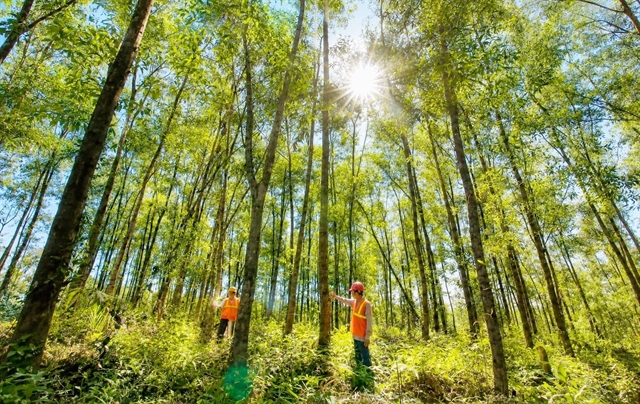
According to a report by the ministry's Department of Forestry and Forest Protection, which prepared the revised plan, the adjustment aims to maximise the potential and value of forests and develop forestry into a modern, efficient and sustainable sector.
The revised plan is also intended to support socio-economic development, environmental protection, conservation of natural resources and improvements in people's livelihoods. It aims to keep Việt Nam's forest cover above 42 per cent by 2030, while improving forest quality and generating average annual GDP growth of up to 5.5 per cent for the forestry sector.
Under the plan, targets are set for forest product exports to reach at least US$20 billion and domestic consumption of at least $6 billion. Annual forest planting is expected to reach up to 300,000 hectares, the report noted.
Trần Quang Bảo, director of the ministry's Forestry and Forest Protection Department, said the revised plan sets total forest land at about 15.6 million hectares in 2030, around 300,000ha less than under the previously approved plan.
Between 2026 and 2030, the sector is expected to require about 3.4 billion seedlings. Concentrated forest planting would cover up to 1.5 million hectares, while restoration would be carried out on about 500,000ha.
For non-timber forest products, the plan calls for sustainable use of existing resources and the development of raw material areas linked to processing, with a focus on medicinal plants, food products and region-specific products.
Annual timber harvesting from concentrated plantations is projected at up to 31 million cubic metres, with another roughly 10 million cubic metres coming from scattered trees, rubber plantations and forest gardens.
The plan also calls for the establishment of five high-tech forestry zones to promote modern production methods, a circular economy and lower emissions, while expanding international markets.
Participants at the meeting said forestry planning should support sustainable development, preserve forest value and ensure a stable supply of raw materials for Việt Nam's wood processing industry.—VNS