Deeper regional coordination needed to unlock southern key economic region’s potential: forum
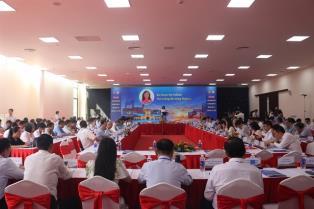
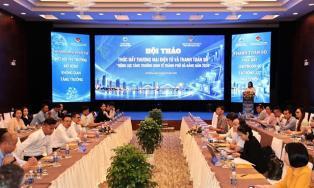
Stronger regional linkages through greater resource sharing, coordinated planning and unified development orientations will give the Southern Key Economic Region ample room for breakthrough growth in the coming period, a forum heard in HCM City on February 4.
HCM CITY — Stronger regional linkages through greater resource sharing, coordinated planning and unified development orientations will give the Southern Key Economic Region ample room for breakthrough growth in the coming period, a forum heard in HCM City on February 4.
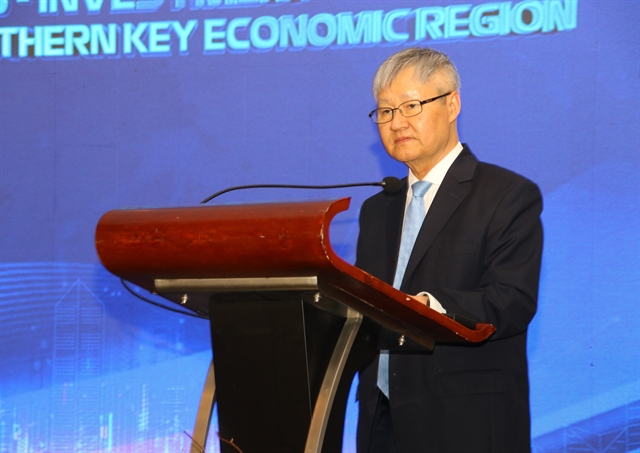
Speaking at the “Business – Investment in the Southern Key Economic Region” forum organised by the Việt Nam Chamber of Commerce and Industry (VCCI), HCM City branch, Võ Tân Thành, vice president of VCCI, said 2025 holds special significance for Việt Nam’s economy, with GDP growing at 8.02 per cent, among the highest in Southeast Asia, to US$514 billion and ranking 32nd globally.
In this context, the southern key economic region, comprising HCM City, Đồng Nai, Tây Ninh and Lâm Đồng, continues to affirm its role as one of the country’s leading growth engines, having the largest number of enterprises in the country and leading in exports and investment attraction, he said.
It is also a major hub for production, services and consumption, with strong spillover effects on other economic regions, he said.
According to Đậu Anh Tuấn, deputy secretary general at VCCI and director general of its legal department, ongoing administrative restructuring has created opportunities for the region’s infrastructure and logistics systems to move from fragmented development towards greater connectivity and coordination.
It is the country’s largest consumer market and manufacturing hub, supported by a rapidly expanding network of industrial parks and export processing zones, he said.
Previously dispersed transport and logistics networks could now be more strategically integrated, helping to reduce, and ultimately eliminate, overlapping port infrastructure fees and BOT charges among localities prior to administrative mergers.
“If regional infrastructure is planned in a seamless and synchronised manner, businesses could reduce logistics costs by an estimated 10–15 per cent compared to the past.”
Stronger multimodal connectivity could help turn the region into a key international cargo transit hub, he said.
Challenges remain
Speakers also pointed to some major challenges.
“The region is facing mounting pressure on transport and logistics infrastructure, increasingly constrained development space, intensifying competition to attract high-quality investment, and rising demand for green development, sustainability and digital transformation,” Thành said.
Tuấn said the provincial reorganisation has also created difficulties, as changes in authority combined with insufficient guidance cause delays.
Projects approved under previous policy frameworks might need to be reviewed to align with the plans of the newly established geographies, while government agencies remain unclear about their jurisdiction now, he pointed out.
To address these issues, he recommended establishing a regional coordination and strategic task force specialising in “one-stop-shop” procedures for major investors, alongside substantive partnerships focused on integrated transport infrastructure planning and joint investment promotion.
He also proposed setting up a regional business council to play an advisory role, providing practical input into planning and investment policy reviews, with participation from business associations and enterprises across the region.
He pointed to the need for strengthening regional connectivity and infrastructure, promoting the digital economy and innovation ecosystems and fostering a more enabling mindset towards private sector development.
Leaders from various localities across the region highlighted their local strengths, investor facilitation efforts and the importance of stronger regional linkages in this new development phase.
Nguyễn Ngọc Phúc, vice chairman of Lâm Đồng Province, whose strengths include agriculture, tourism and renewable energy, acknowledged that the administrative restructuring and the switch to the two-tier local government system pose certain challenges for investors.
But his province is accelerating staff training and aims to finalise its zoning plan within this year.
Businesses seek stability, long-term partnerships
Speaking from the business perspective, Leaw Wee Ming, general director of the VSIP Cần Thơ JSC, said high-quality investors typically look for three key factors: reliable infrastructure, a credible operating environment and long-term partnerships.
His park competes on the quality of outcomes rather than incentives alone, prioritising investors with responsible operations and long-term commitments, particularly those aligned with green transition trends and higher value-added manufacturing, he said.
“We aim to act as a connector, linking investors with local partners, talent and supply chain opportunities so that investment is not isolated but integrated into the regional economy.”
From the perspective of foreign investors, a representative of the HCM City Chapter of the China Business Association in Việt Nam said most member companies view Việt Nam’s investment and business environment as improving.
Around 75 per cent of surveyed enterprises reported being fairly satisfied and confident about their long-term development prospects in the country, she said.
Nevertheless, they also worry about persistent challenges like rapidly changing policies with unclear guidance for transitioning, complex administrative and customs procedures and inconsistent interpretation and enforcement of regulations across localities, she said.
She called for greater policy transparency and stability, stronger inter-agency coordination, clearer guidance on foreign labour management, and continued investment in infrastructure and logistics services.
“By 2026, when new policies are implemented more smoothly, conditions are expected to be favourable for increased investment flows from China.” — VNS