Data centre in Việt Nam is tranforming to a data-high era
The data centre market in Việt Nam is in the midst of explosive growth, evolving from a mere technical infrastructure to becoming a coveted high-tech real estate asset that attracts global investors, experts said.

HCM CITY — The data centre market in Việt Nam is in the midst of explosive growth, evolving from a mere technical infrastructure to becoming a coveted high-tech real estate asset that attracts global investors, experts said.
One of the primary catalysts driving this growth is the rise of Generative AI (GenAI), which is fueling data centre demand globally, including in Việt Nam.
Forecasts suggest that approximately 70 per cent of the global data centre processing volume from 2023 to 2030 will be AI-related, encompassing both AI Training and AI Inference.
The Asia-Pacific region is anticipated to capture a substantial market share, accounting for around 45 to 55 GW of global demand by 2028.
The demand for AI necessitates higher rack density and enhanced cooling capabilities compared to traditional data centres, leading to a shift towards large-scale and hyperscale (over 5 MW) colocation data centre models. These models enable businesses to reduce initial investment costs and maintain stable operating expenses, allowing them to focus on their core operations.
According to the CBRE Asia-Pacific Investor Intentions Survey 2025, data centres have risen to the second position on the list of most preferred alternative asset classes for investment in the region.
The Việt Nam data centre market is primarily driven by the boom in Artificial Intelligence (AI) and the national digital transformation process.
Việt Nam’s total operating capacity is projected to increase by 5.6 times from 2030 onwards, from the current capacity of 104 MW.
The country possesses a solid digital foundation, generating stable domestic demand.
Dương Thuỳ Dung, executive director of CBRE Vietnam, said: “Việt Nam currently boasts a construction cost advantage, with prices of only around US$7.0 million/MW, nearly 50 per cent lower than tier 1 markets like Tokyo or Singapore. This significant disparity, combined with the explosive hyperscale demand from AI, is creating compelling investment opportunities in Southeast Asia.
"Crucially, investors must pursue strategic cooperation through joint venture models or mergers and acquisitions to mitigate risks and navigate power supply and project deployment speed hurdles, thereby fully capitalising on the 5.6-fold growth potential of the Vietnamese DC market over the next decade.”
According to CBRE, as of 2024, Việt Nam has about 80 million internet users, equivalent to 79 per cent of the population, with an exceptional mobile connectivity rate. The growth of the digital economy is reflected in the target for E-commerce Gross Merchandise Value (GMV) to reach $35 billion by 2025. The cloud services market is also forecast for strong growth with a CAGR of 21.65 per cent until 2030.
Notably, with the National Data Centre led by the Ministry of Public Security officially commencing operations from August 19, 2025, demand for Cloud infrastructure for state agencies, high-performance computing systems, and the Open Data Portal will increase significantly. This commitment not only creates a large and stable source of demand but also sets stringent standards for safety, cybersecurity, and operational capabilities, benefiting existing domestic DC providers such as Viettel and VNPT.
The biggest competitive advantage lies in its construction cost, creating superior investment opportunities compared to developed markets. However, investors need to proactively manage structural hurdles relating to complex licensing procedures and the risk of power supply shortages.
As of October 2025, the total operating capacity of the Việt Nam data centre market reached 104 MW. This scale is relatively modest at only about one-tenth of leading regional markets like Shanghai or Singapore.
The current Việt Nam market is dominated by five large entities, mainly telecommunications carriers and state-owned enterprises, accounting for up to 97 per cent of total operating capacity. Viettel IDC leads with a 41 per cent market share, followed by VNPT with 24 per cent. The proportion of supply indicates a certain barrier to entry for foreign investors looking to penetrate the market.
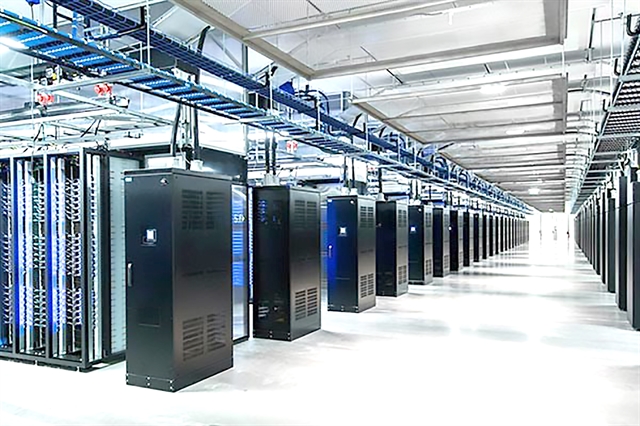
Việt Nam holds an absolute cost competitive advantage over developed markets in the Asia-Pacific region, according to CBRE. The cost of building a tier III data centre in HCM City and Hà Nội is nearly 50 per cent lower than in Tier 1 markets like Tokyo and Singapore.
This significant difference in initial capital cost, combined with low land costs, creates attractive investment potential and opportunities for international investors.
The Vietnamese Government has introduced supportive policies for digital infrastructure development, including commitments to deploy at least ten new undersea fibre optic cables by 2030.
Revised Investment Laws and national digital transformation programmes aim to attract more FDI into the digital infrastructure sector. Additionally, a young and skilled population provides a strong foundation for the long-term growth of the digital economy, with a target of 75 per cent of the workforce having specialised training by 2030. — VNS