Đà Nẵng, WB, Swiss partner launch platforms of Public Asset Governance
The central city, in co-operation with the World Bank (WB) and the Swiss Cooperation Office (SECO) in Việt Nam, officially launched two use-case platforms developed by the Disruptive Technologies for Public Asset Governance (DT4PAG) project - the Đà Nẵng Public Buildings Management System (PBMS) and downtown Hải Châu Ward’s Spatial Integrated Management Platform (SIMP).
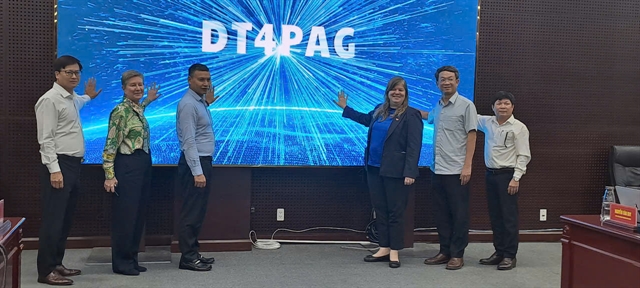
ĐÀ NẴNG - The central city, in co-operation with the World Bank (WB) and the Swiss Cooperation Office (SECO) in Việt Nam, officially launched two use-case platforms developed by the Disruptive Technologies for Public Asset Governance (DT4PAG) project - the Đà Nẵng Public Buildings Management System (PBMS) and downtown Hải Châu Ward’s Spatial Integrated Management Platform (SIMP).
The three-year DT4PAG project uses a ‘People-Process-Technology’ approach to promote resilient and inclusive infrastructure services delivery through digital government transformation across city-provincial governments. The project anchored its support in three cities, HCM City, Đà Nẵng and Huế City, and facilitated policy dialogues with central ministries, including the Ministries of Finance, Construction, Science and Technology, and the Central Party Office on the cities’ use-case development.
Speaking at the closing ceremony of the DT4PAG project, World Bank Country Director for Việt Nam, Cambodia and Laos Kathleen Whimp stressed: “The project brings together two important agendas for Việt Nam’s future. One is the need for improved public asset governance as part of a healthy system of public financial management. The other is the digital transformation agenda, which both enables private sector growth and improves efficiency in the public sector.”
“These agendas position digital innovation – particularly data platforms, analytics, and emerging technologies such as AI – as a catalyst to shift public asset and urban management from reactive oversight to proactive, lifecycle optimisation, unlocking greater value from existing investments.”
She added: “The Government of Việt Nam has set the ambitious goal of reaching high-income status by 2045, and the WB worked together with the government on analytical work on the reforms required to achieve that lofty ambition. The Breaking Through Institutions for a High-Income Future report, alongside digital and innovation diagnostics, highlights that strong institutions increasingly depend on the effective use of data, digital platforms, and innovation to improve public investment outcomes. Countries that successfully escaped the middle-income trap not only increased and improved public investment but also embedded digital solutions to manage assets more efficiently across their lifecycle. The key message for Việt Nam is clear: Taking care of assets – through smarter, data-driven approaches – is as important as creating them.
She said the launching of two of the platforms supported by DT4PAG in Đà Nẵng City produces benefits that are many multiples of their cost, adding that this approach has demonstrated its value.
She hoped that it would encourage Việt Nam’s other cities and wards within cities to replicate these models, scaling up the benefits to many other places.
Vice chairman of the city’s people’s committee, Hồ Kỳ Minh, highly appreciated the project, stating that this will help boost digital database management as a crucial way towards full digitalisation and becoming a ‘smart’ city.
Minh said the use of digital database solutions for communities and businesses will improve effective management of public assets and finance, while reducing administrative procedures, paperwork and policy making.

Sibylle Bachmann, Head of SCO, said: DT4PAG’s People, Process and Technology approach has been so important. Technology can create new possibilities, but people make it work, and processes make it sustainable."
The programme has supported capacity building through the Digital Governance Academy. It has contributed to policy and regulatory discussions and has helped develop practical use cases in HCM City, Đà Nẵng and Huế.
“The cost-benefit analysis to be presented today is also very useful. It helps demonstrate the potential value of these investments in concrete terms. But it also reminds us that benefits are not automatic. They depend on whether platforms are fully activated, institutionally embedded, maintained, and used in daily decision-making,” she said.
“We are proud to have supported DT4PAG. Switzerland will continue to support Việt Nam’s journey towards a resilient high-income economy. We hope that today’s workshop will not only mark the successful conclusion of the programme, but also renew our shared commitment to practical, evidence-based and citizen-oriented digital transformation in Việt Nam’s cities.”
The Fulbright University Việt Nam also supported the project by co-creating the Digital Government Academy.
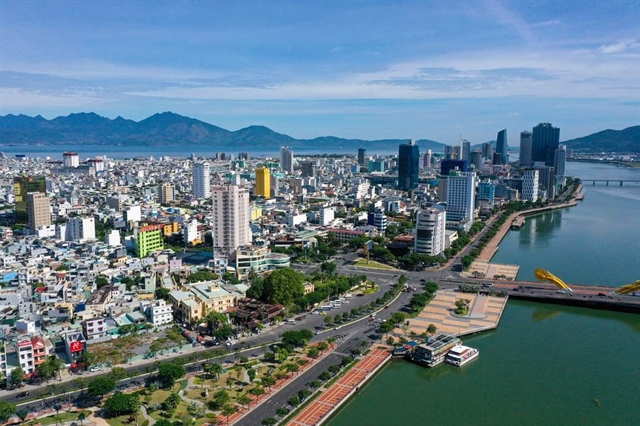
Đà Nẵng City is setting out an ambitious long-term vision to become a smart, liveable urban centre and a key national hub for logistics, start-up innovation, finance, free trade and sea-based economic growth by 2050, with a further goal of evolving into a global eco-city and desirable destination by 2075. VNS