Cyber insurance gains urgency as AI-driven threats intensify
AI-driven cyber threats are pushing Vietnamese businesses to strengthen cyber resilience and rethink traditional security strategies.
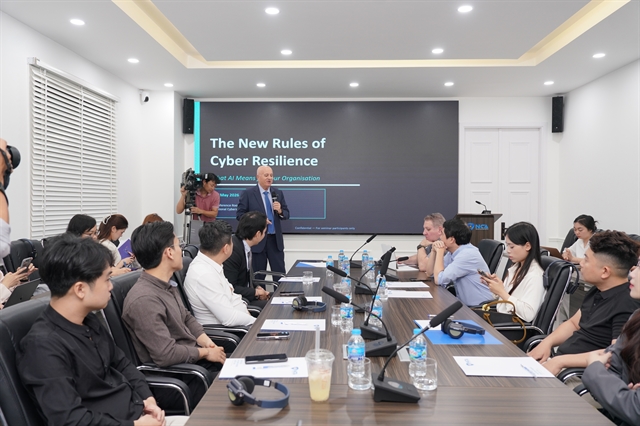
HÀ NỘI — Cybersecurity experts are warning that businesses can no longer rely on traditional defence systems, as artificial intelligence (AI) rapidly changes the scale and speed of cyber attacks.
At a conference on cyber insurance and resilience in the AI era held in Hà Nội this week, specialists said companies are facing growing risks from AI-powered attacks capable of identifying vulnerabilities and infiltrating systems within hours rather than months.
Yair Bar-Touv, chief executive for cybersecurity and board member of Cyber-Trends, said AI is transforming cyber attacks from isolated technical incidents into broader operational and financial threats, forcing businesses to rethink how they manage risk and recovery.
According to Bar-Touv, AI-assisted attacks can have success rates of up to 72 per cent, compared to less than 1 per cent for earlier generations of cyber attacks.
He said AI-powered tools can automatically detect security gaps, generate attack scenarios, and launch highly targeted operations at speeds beyond human response capacity.
AI has demonstrated the ability to uncover vulnerabilities that remained undetected for decades in systems previously regarded as highly secure, he noted.
The conference, organised by the National Cyber Security Association, brought together cybersecurity, insurance and risk management specialists as Việt Nam accelerates digital transformation across industries.
Experts said the rapid adoption of cloud computing, AI and data-driven operations is increasing pressure on enterprises to strengthen both cyber defence and post-attack recovery capabilities.
Many companies, however, still rely heavily on periodic security testing and fragmented security systems that are no longer sufficient against automated threats operating continuously in real time.
As a result, specialists are increasingly promoting an 'AI versus AI' approach, in which businesses deploy AI-powered tools to monitor systems, scan vulnerabilities and respond to attacks more quickly.
Businesses can no longer rely on periodic security checks, but they need AI-powered systems capable of continuously scanning vulnerabilities and updating defences in real time, conference attendees were told.
Experts at the conference said security operations centres are playing a growing role in coordinating cyber defence, while experienced negotiators in ransomware cases can help reduce actual ransom payments by as much as 62 per cent.
Cyber insurance is also emerging as a more important component of corporate risk management strategies.
According to Hà Quốc Nam, head of financial lines insurance at Marsh Vietnam, enterprises are facing growing risks not only from cyber attacks, but also from stricter data protection requirements and rising reputational risks.
Nam said the impact of cyber incidents now extends far beyond technical disruption, affecting legal compliance, customer trust and long-term business performance.
He added that cyber insurance is evolving beyond a purely financial product into a broader resilience tool covering crisis response, legal services, ransomware negotiations, business interruption losses and data recovery expenses following cyber attacks.
“The issue is no longer whether a company will be attacked, but when that incident will occur,” Nam said.
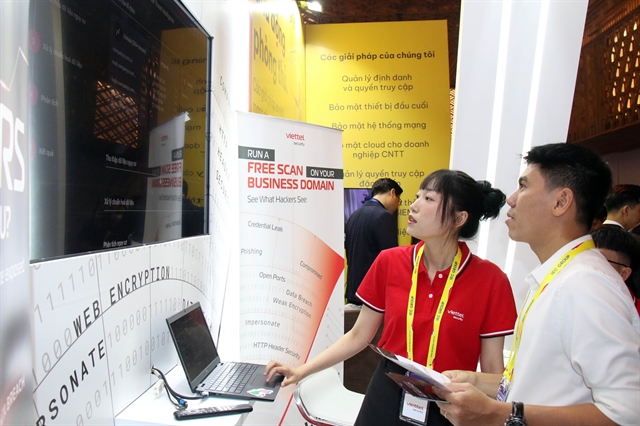
According to experts at the conference, the average global cost of a major data breach has risen to around US$5 million, while ransomware attacks continue to target organisations of all sizes.
Specialists also warned that many businesses still underestimate the limitations of cyber insurance policies, particularly clauses related to AI-related risks, third-party providers and mandatory security standards such as multi-factor authentication.
Beyond technical investment, experts said businesses need comprehensive crisis management plans involving executives, technology teams, legal advisers and communications specialists.
For smaller firms with limited cyber security resources, recovery capability may ultimately determine whether they can survive serious cyber incidents.
The growing focus on cyber resilience also comes as Việt Nam accelerates its national digital transformation agenda under Resolution 57-NQ/TW, which identifies science, technology, innovation and digital transformation as strategic drivers of economic growth.
The resolution of the Politburo of Communist Party of Việt Nam prioritises the application of key technologies, including AI, semiconductors, biotechnology and big data, while also calling for stronger digital infrastructure, more skilled workers and improved data security frameworks to support the country’s long-term development goals.
Experts said stronger digital infrastructure will need to be matched by stronger security and risk governance frameworks as AI adoption expands further across the economy.
They added that businesses should move towards multilayered resilience models integrating cyber defence, risk governance, insurance and crisis recovery into a unified long-term strategy. — VNS