CORSIA puts Việt Nam's aviation sector on a carbon clock
By 2026, around 130 countries have volunteered to participate in the scheme, significantly expanding the scope of compliance and driving demand for eligible carbon credits.
By Ly Ly Cao
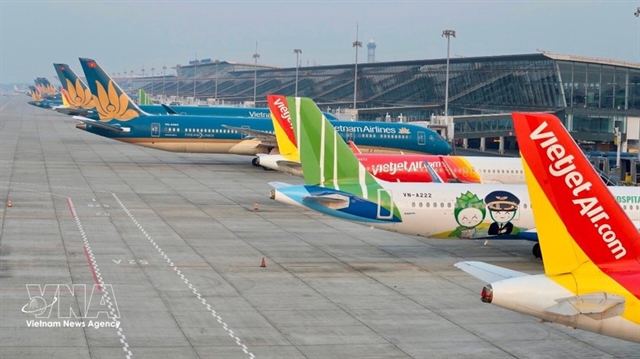
HÀ NỘI — Việt Nam’s aviation sector is entering a pivotal phase as it prepares to meet the requirements of the Carbon Offsetting and Reduction Scheme for International Aviation (CORSIA), a global mechanism that is reshaping how airlines manage emissions and carbon costs.
Established by the International Civil Aviation Organisation (ICAO), CORSIA requires airlines to offset carbon dioxide emissions from international flights that exceed 2019 levels, aiming to achieve carbon-neutral growth for the sector. The scheme has been in place since 2021 and is structured in phases, moving from voluntary participation to mandatory compliance for most countries, including Việt Nam, from 2027 onwards.
By 2026, around 130 countries have volunteered to participate, significantly expanding the scope of compliance and driving demand for eligible carbon credits.
Rising demand for carbon offsets
Under CORSIA, airlines must offset emissions using CORSIA Eligible Emission Units (EEUs), each representing one tonne of CO2 equivalent reduced or removed from approved projects. These credits must meet strict criteria, including issuance under ICAO-approved standards and the provision of corresponding adjustments or Letters of Authorisation to prevent double counting.
For Việt Nam, compliance obligations are expected to grow rapidly. Estimates indicate total offsetting demand from 2024 to 2035 could reach between 10.7 million and 15.4 million tonnes of CO2, reflecting the expansion of international aviation activity and tightening regulatory requirements. At the airline level, annual offsetting requirements could rise to around 1.5 million tonnes of CO2 by 2035.
The cost implications are substantial. Depending on market conditions, carbon credit prices are projected to fluctuate widely, contributing to total compliance costs that could reach hundreds of millions of US dollars over the full compliance period. These additional costs are expected to have broader economic effects. Assessments presented at a technical workshop suggest global airfares could increase by US$0.3 to 2.0 per ticket in the first phase and potentially up to $5 per ticket in later phases, affecting passenger demand and competitiveness.
At the same time, failure to comply carries financial and reputational risks.
“Việt Nam may face not only additional financial burdens in the event of non-compliance but also growing pressure in terms of image, credibility and competitiveness,” said Nguyễn Lê Khánh Linh, technical expert at Vietnam PoA Carbon Management JSC.
Experience from other jurisdictions shows effective CORSIA implementation requires a comprehensive regulatory framework, including robust monitoring, reporting and verification (MRV) systems, clearly defined institutional responsibilities and transparent enforcement mechanisms. In Europe, for example, CORSIA operates alongside the EU Emissions Trading System, with strict requirements for emissions reporting and penalties for non-compliance, including financial sanctions per tonne of unoffset emissions.
Similar approaches have been adopted in countries such as Canada, Japan and Singapore, where MRV obligations and enforcement frameworks are embedded in aviation legislation.
According to Roxanne Tan, international carbon market expert at South Pole, comprehensive MRV and offsetting requirements, together with transparent enforcement and penalty structures, are among the key elements of a robust CORSIA regulatory framework.

Compliance strategies for Việt Nam
Vietnamese airlines are expected to rely on a combination of measures to meet their obligations, including improving operational efficiency, upgrading aircraft technology, adopting sustainable aviation fuels (SAF) and purchasing carbon credits.
While SAF is regarded as a critical long-term solution with high emission reduction potential, its current availability remains limited, accounting for less than 0.1 per cent of global aviation fuel consumption, with supply projected to meet only a small fraction of demand by 2030, said Đặng Hồng Hạnh, team leader and carbon market expert at Vietnam PoA Carbon Management JSC.
As a result, carbon offsetting through EEUs is expected to remain the primary compliance mechanism in the near term.
Experts recommend that airlines adopt diversified procurement strategies, including forward purchase agreements, direct investment in emission reduction projects and phased purchasing approaches to manage price volatility and supply risks, Hạnh added.
At the policy level, authorities are being urged to finalise legal frameworks governing carbon credit transfers, including procedures for issuing Letters of Authorisation and applying corresponding adjustments, in order to unlock domestic credit supply and ensure compliance with international requirements. — BIZHUB/VNS