Central region targets double-digit industry growth
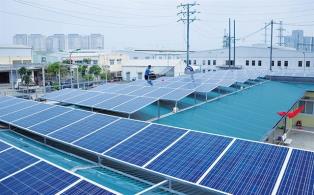
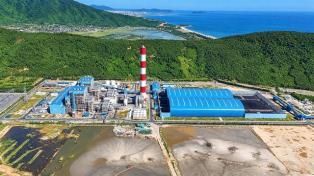
The industry and trade sector in the centre and the central highlands region is targeting double-digit growth, with priorities including boosting industrial production, expanding exports, developing manufacturing and ensuring stable supplies of electricity and essential goods.
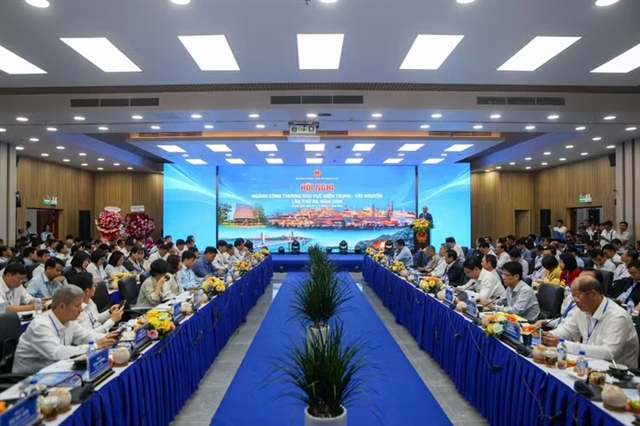
QUẢNG NGÃI — The industry and trade sector in the central and the central highlands region is targeting double-digit growth, with priorities including boosting industrial production, expanding exports, developing manufacturing and ensuring stable supplies of electricity and essential goods.
The targets were announced at a conference for industry and trade departments of localities in the central and the central highlands region held in Quảng Ngãi Province on November 10.
They comprises 11 provinces and cities, including Thanh Hóa, Nghệ An, Hà Tĩnh, Quảng Trị, Huế, Đà Nẵng, Quảng Ngãi, Gia Lai, Đắk Lắk, Khánh Hòa and Lâm Đồng.
Other priorities include promoting exports through market diversification and greater use of free trade agreements (FTAs), developing the domestic market, and strengthening mineral resource management in line with approved plans, licences and reserves.
The region also aims to improve the investment and business environment, address difficulties facing enterprises and promote regional connectivity, digital and green transformation, e-commerce and logistics.
Other tasks include strengthening state management, accelerating administrative reforms and ensuring the smooth operation of the two-tier local administration system.
The specific targets for 2026 include year-on-year growth of more than 10 per cent in the industrial production index (IIP) and 12 per cent in total retail sales of goods and consumer service revenue, to over VNĐ2 trillion (US$77 million). Exports are targeted to increase by 10 per cent to more than $45.4 billion, while imports are expected to rise by 11.8 per cent to over $44.8 billion.
According to a report presented at the conference, the regional industry and trade sector continues to make an important contribution to gross regional domestic product (GRDP) growth, market stability, the balance of supply and demand, and job creation.
Nine out of 11 localities in the region gained a year-on-year growth of 10 per cent in the first ten months of this year. Of which, Hà Tĩnh recorded the highest growth at 42.17 per cent, followed by Nghệ An at 21.49 per cent, Quảng Trị at 15.49 per cent, Quảng Ngãi at 13.8 per cent, and Đắk Lắk at 13.54 per cent.
For the whole of 2026, the IIP is estimated to increase by between 10.2 and 21.5 per cent in most localities, helping raise the industry sector's share in the economy, create jobs, boost budget revenue and support regional economic growth.
Trade and services also maintained positive growth. Total retail sales of goods and consumer service revenue rose 17.7 per cent in the first 10 months of the year against the same period of last year.
Import-export activities also continued to grow. Businesses have proactively upgraded technology, adjusted their product structures and expanded markets, helping create jobs and improve competitiveness.
In recent years, local authorities have introduced various measures to support production and business activities and address difficulties facing enterprises.
They have also stepped up administrative and management reforms, trade promotion, industrial promotion programme and development of supporting industries.
Quảng Ngãi People's Committee Chairman Nguyễn Đức Tâm said a number of key development orientations offered at the conference would open up new cooperation opportunities and provide fresh momentum for the region in 2027 and beyond.
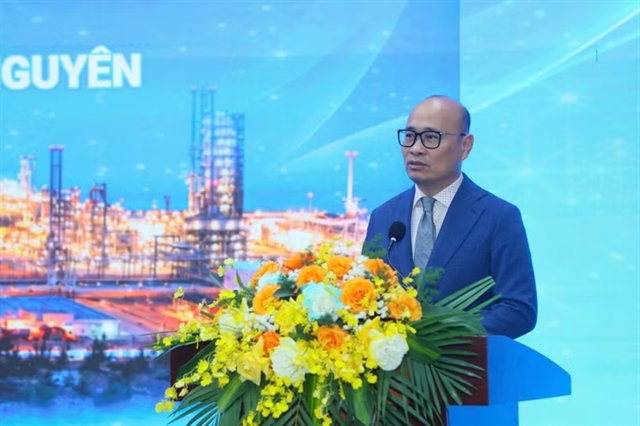
Deputy Minister of Industry and Trade Lương Hoàng Thái outlined several priorities for the region, focusing on energy security, industrial project implementation, domestic supply, trade and logistics.
Ensuring sufficient power supply will require closer coordination between power generation and grid development. In industry and minerals, delays affecting major projects need to be tackled to accelerate implementation.
Preparations for the year-end shopping season and Lunar New Year should focus on securing goods supplies and maintaining efficient distribution networks, while export growth will depend on stronger business capacity and access to a wider range of markets.
Thái also highlighted the need to make better use of the region’s production strengths, particularly in processed and manufactured goods and agricultural, forestry and fishery products. Closer monitoring of these product groups would help businesses identify potential markets and customers.
Logistics connectivity was another priority, with stronger links needed between raw material production areas, industrial parks in the Central Highlands and other regional localities, seaports, border gates and East-West economic corridors.
"Investment in logistics centres must be based on actual demand, their ability to attract businesses and the effective use of existing infrastructure. This will help reduce storage and transport costs and support the distribution of goods across the region," Thái said. — VNS