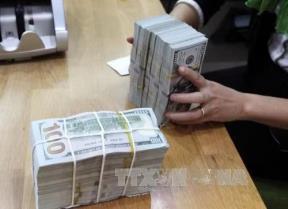
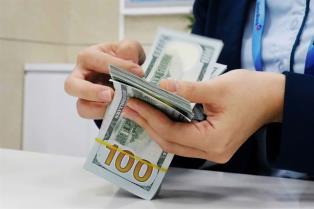
Central bank plans regular spot foreign currency purchases to enhance liquidity support
The central bank will purchase the dollars every Monday and Wednesday. If a scheduled transaction day falls on a public holiday, the purchase session will be moved to the next working day.
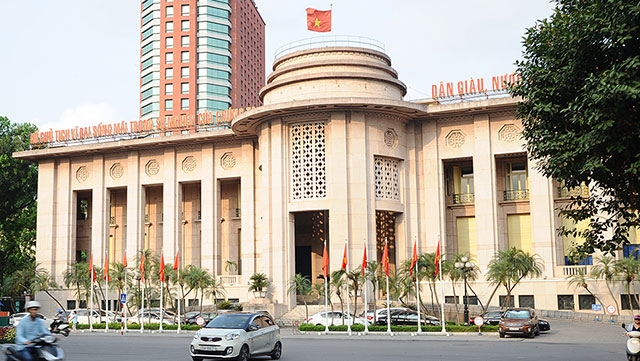
HÀ NỘI — The State Bank of Vietnam (SBV) has announced a plan for regular spot purchases of US dollars twice a week at an exchange rate of VNĐ25,500 per dollar from November 11, in a move aimed at injecting more liquidity into the market.
Under the plan, the central bank will purchase the dollars every Monday and Wednesday. If a scheduled transaction day falls on a public holiday, the purchase session will be moved to the next working day.
Participation is open to credit institutions and branches of foreign banks that hold a positive foreign currency position. The maximum volume of dollars to be purchased by the SBV will be the amount necessary to bring each institution’s foreign currency position back to a balanced state, based on data from the end of the working day immediately preceding the transaction session.
Through this mechanism, banks with qualifying dollar holdings can sell their dollars to the SBV in exchange for Vietnamese đồng at the set purchase rate. At a rate of VNĐ25,500 per dollar, every $1 billion purchased by the SBV will result in approximately VNĐ25.5 trillion being injected into the banking system. The SBV has not yet disclosed the total limit for foreign currency purchases per session.
The new purchase rate is notable, as it is significantly higher than the SBV’s listed purchase rate. Specifically, the SBV’s dollar purchase rate on November 6 stood at VNĐ24,385 per dollar, VNĐ1,115 lower than the VNĐ25,500 per dollar rate set for this new initiative. Although they belong to two different trading mechanisms, the new price level has moved closer to the rate on the interbank market.
According to market data, the interbank USD/VNĐ exchange rate closed the session on November 6 at VNĐ25,588 per dollar, just VNĐ88 above the SBV’s new buying rate. This development comes as the interbank exchange rate has cooled down compared to late 2025, providing more favourable conditions for the SBV to consider purchasing the greenback.
Beyond liquidity considerations, the purchase also serves to bolster foreign exchange reserves. Việt Nam’s foreign exchange reserves peaked at approximately $109.64 billion in January 2022, before declining to about $82.65 billion by August 2026. Meanwhile, the expanding scale of international trade continues to drive growing demand for foreign currency within the economy.
The plan for periodic spot dollar purchases was announced just a few days after the SBV carried out another liquidity support mechanism through foreign currency swaps.
Specifically, the SBV on November 9 initiated a 182-day USD/VNĐ swap arrangement with a maximum volume of $2 billion. Under this mechanism, the central bank purchases the dollar from credit institutions on a spot basis at an exchange rate of VNĐ24,399 per dollar, while simultaneously committing to sell back the same amount of foreign currency after 182 days at an exchange rate of VNĐ24,704 per dollar. If the full $2 billion cap is utilised, this swap operation would initially inject nearly VNĐ48.8 trillion into the banking system. After 182 days, the participating credit institutions will repurchase the dollar as agreed and return the đồng-denominated funds to the SBV.
According to experts, carrying out both approaches provides the SBV with greater flexibility in managing liquidity. While the swap operation supplies the đồng for a fixed duration, spot foreign currency purchases provide an infusion of đồng without a predetermined maturity date for repayment.
These measures come at a time when short-term capital costs in the interbank market remain elevated. During the session on November 6, the overnight VNĐ interbank interest rate reached 6.2 per cent per annum, significantly higher than the 4.5 per cent per annum rate applied to open market operations.
By purchasing dollars and settling in đồng, the SBV enables participating banks to bolster their available capital, helping them meet payment obligations and balance their liquidity. If the transaction volume is sufficiently large, this additional liquidity could reduce the demand for borrowing in the interbank market, helping to cool down short-term interest rates.
However, the extent to which this influences deposit and lending interest rates depends on various factors, including the actual volume of foreign currency purchased, credit demand, deposit mobilisation conditions and other liquidity management operations conducted by the SBV. — BIZHUB/VNS