Cà Mau’s specialty Tài Nguyên rice seeks global markets
Agricultural experts note that the rice is produced under specific natural conditions which contribute to the rice’s unique qualities — soft texture, fragrant aroma and rich flavour — which distinguish it from other varieties.
CÀ MAU — A locally cherished rice variety grown for generations in southern Việt Nam is beginning to find a path beyond domestic markets, offering new opportunities for farmers in Cà Mau Province.
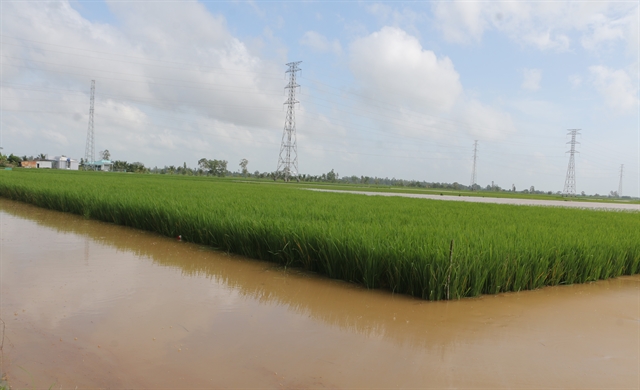
The specialty Tài Nguyên rice, grown mainly in communes such as Vĩnh Lợi, Châu Thới and Hưng Hội, benefits from favourable soil conditions and long-standing traditional farming practices.
Although the rice has long been consumed primarily within the domestic market, its economic returns are often higher than many export-oriented rice varieties.
By late February this year, farmers in Tài Nguyên rice-growing areas across Cà Mau entered the main harvest season.
Strong yields and stable prices have brought renewed optimism to local producers.
At the same time, a newly signed export contract – the first of its kind for the variety – has opened the door for the rice to reach international consumers.
A promising harvest
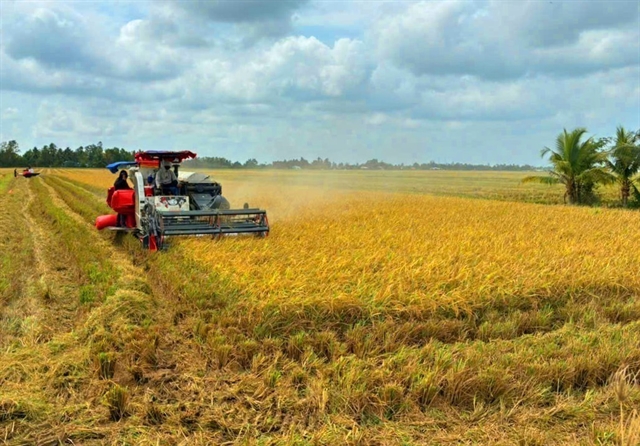
On fields in Trà Ban Hamlet in Vĩnh Lợi Commune, the atmosphere has been bustling in recent days as farmers race to harvest their crops under the scorching dry-season sun. The sound of combine harvesters and transport machines echoes across the fields.
Từ Văn Dẫn, a local farmer harvesting around two hectares of Tài Nguyên rice fields, said the crop faced early challenges due to high tides that flooded newly planted fields.
However, careful crop management helped ensure a successful season.
“This year the yield is quite good. The rice sells for around VNĐ8,200 per kilogram (about 33 US cents). After production costs, each hectare brings a profit of about VNĐ45 million (around $1,800), which is a fairly good income for farmers,” Dẫn said.
A similar sense of satisfaction could be seen on the face of Võ Văn Vũ Hoàn, a farmer in Nhà Dài A Hamlet of Vĩnh Lợi Commune, whose family had just completed harvesting six hectares of rice fields.
With yields reaching around nine tonnes per hectare, the harvest produced roughly 50 tonnes of rice.
“With the price ranging from about VNĐ8,000 per kilogram, our family earns nearly VNĐ250 million ($10,000) in profit this season,” Hoàn said.
According to Hứa Sít, chairman of the Vĩnh Lợi Commune People’s Committee, more than 1,000 hectares of Tài Nguyên rice were cultivated in the commune this season.
Most of the area is currently being harvested.
Good yields and favourable prices not only ensure stable incomes for farmers but also encourage them to invest further in improved cultivation techniques for future crops.
Untapped potential
Despite being mostly consumed in domestic markets, Tài Nguyên rice holds significant economic value.
Agricultural experts note that the rice is produced under specific natural conditions, including distinctive soil characteristics, climate and traditional cultivation methods.
These factors contribute to the rice’s unique qualities — soft texture, fragrant aroma and rich flavour — which distinguish it from other varieties.
The brand “Tài Nguyên Vĩnh Lợi Rice” was granted a collective trademark certificate by the Intellectual Property Office of Việt Nam in 2010.
Subsequently, authorities in Vĩnh Lợi Commune of Bạc Liêu Province, in collaboration with the Mekong Delta Rice Research Institute, worked to restore and preserve the original seed variety.
However, for many years the collective trademark failed to fully realise its potential due to a lack of organised production linked with stable consumption markets, resulting in fluctuating prices for farmers.
Tô Thanh Hải, vice chairman of the Châu Thới Commune People’s Committee, said Tài Nguyên rice originated from traditional seasonal rice varieties selected and preserved by local farmers over decades.
“The brand has not yet developed as expected mainly because there has been no comprehensive planning for high-quality specialty rice production areas aimed at gaining geographical indication status,” Hải said.
Toward global markets
In addition, the overuse of chemical fertilisers and pesticides by some farmers has gradually affected the quality of the rice.
To address these issues, the Cà Mau Department of Agriculture and Environment has coordinated with local authorities to implement various measures, including building concentrated production zones and establishing traceability systems.
These efforts aim to improve production efficiency while raising farmers’ incomes.
Encouragingly, a three-party cooperation agreement was recently signed between the Saigon Green Economy Cooperative, Total Feeling LLC (USA) and the Hưng Thịnh Cooperative in Vĩnh Lợi Commune to export 30 tonnes of specialty Tài Nguyên rice to the US.
The deal marks a breakthrough in promoting the rice variety and opens new prospects for expanding its presence in global markets.
According to Vĩnh Lợi Chairman Sít, building a stronger brand for Tài Nguyên rice will require safe production models that meet VietGAP standards, organic farming practices and modern cultivation techniques.
Equally important is a shift in farmers’ production mindset, encouraging the use of biological fertilisers and reducing chemical inputs that may diminish the rice’s distinctive qualities.
Local authorities will continue working with provincial agencies to restore the original Tài Nguyên seed variety, develop concentrated farming zones and ensure strict control of both production inputs and product quality.
Efforts will also focus on granting planting area codes, implementing traceability systems and gradually building a closed value chain capable of meeting the requirements of demanding export markets.
As Vĩnh Lợi and neighbouring areas step up trade promotion and expand market access, officials say building a stable value chain and meeting export standards will be key to turning Tài Nguyên rice into a competitive, high-value product in global markets. — VNS