Bottlenecks for LNG power expansion must be tackled to accelerate supply
Việt Nam aims to have 22 LNG-fired power projects built and put into operation between 2025 and 2035, of which fifteen projects with combined capacity of 22,524MW are scheduled to enter commercial operation by 2030.
HÀ NỘI — Việt Nam needs to tackle bottlenecks related to finance, market and infrastructure to turn plans for 22,524MW of liquefied natural gas (LNG) power capacity by 2030 into operational projects, as electricity demand rises rapidly to help achieve the country’s double-digit growth target.
Under the revised eighth power development plan, Việt Nam aims to have 22 LNG-fired power projects built and put into operation between 2025 and 2035, of which fifteen projects with combined capacity of 22,524MW are scheduled to enter commercial operation by 2030.
Politburo Resolution 70-NQ/TW calls for energy development to stay ahead of demand, and sets a target of developing sufficient LNG import capacity by 2030 to supply gas-fired power plants and other users, while establishing LNG energy hubs across regions.
Associate Professor Trần Đình Thiên, former director of the Việt Nam Institute of Economics, said LNG has emerged as an optimal solution to rapidly growing electricity demand while restructuring the energy mix towards cleaner sources.
Thiên said LNG-fired power is expected to account for up to 12.3 per cent of Việt Nam's projected generation capacity by 2030, highlighting the challenge of rapidly expanding power supply while significantly restructuring the generation mix.
But industry officials and experts said the biggest challenge was moving projects from planning to financial close and construction.
Bùi Quốc Hùng, deputy director of the Electricity Authority of Vietnam under the Ministry of Industry and Trade, said LNG power is a strategic transitional source as Việt Nam's electricity demand rises and the power system requires greater reliability and flexibility.
The technology itself is relatively mature, but the economics of projects remain more difficult, he said.
LNG is imported, leaving fuel costs exposed to international prices, transport costs, exchange-rate movements and geopolitical developments, while power projects require large upfront investment and long-term financing.
Hùng identified key issues in developing LNG power, including creating stable power purchase and dispatch mechanisms, developing synchronised LNG infrastructure, coordinating power plants with grid development, strengthening investor accountability and ensuring LNG development does not delay the broader energy transition.
It is critical to review all LNG projects to classify them based on their readiness investment procedures, land, infrastructure, gas supply, financing and grid connections.
Projects that can be completed earlier should be prioritised for resolving bottlenecks, while delayed projects should be addressed and alternative or additional power sources prepared to safeguard supply-demand balance, Hùng said.
He noted that LNG import infrastructure must also be developed alongside the establishment of LNG-to-power hubs using shared infrastructure.
The electricity pricing and direct power purchase agreement mechanisms should continue to be improved, he said.
Ngô Trí Long of the Việt Nam Financial Consultants Association said financing and market design are the two most important factors for LNG power projects to raise capital and operate efficiently.
LNG projects require huge capital investment and long payback periods, while uncertainty over electricity prices, output, exchange rates and the allocation of risks can make lenders reluctant to provide long-term loans, he said.
According to Long, imported LNG prices can also fluctuate sharply, while arrangements for LNG procurement, electricity pricing and dispatch from the plants need to be clearer and infrastructure like terminals and pipelines should provide fair access.
He said Việt Nam needs to address both the financing and market challenges by ensuring predictable cash flows and bankable contracts while creating transparent price signals and a competitive, efficient market.
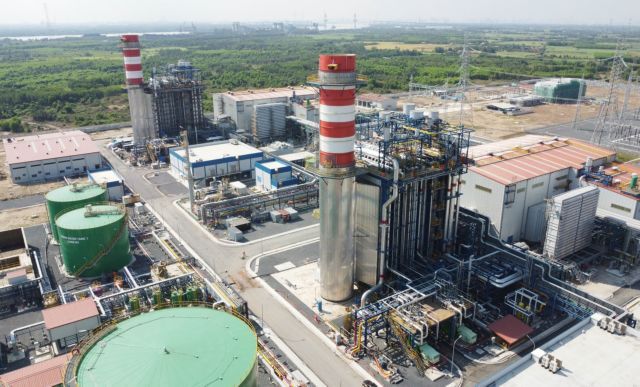
Currently, two LNG-fired power plants have been put into commercial operations in Việt Nam, namely Nhơn Trạch 3 and 4. — VNS