Arabica coffee ambitions brew in Sơn La
The province had approximately 26,120 hectares of Arabica coffee, with an estimated output of 37,724 tonnes of green coffee beans by the end of last year.
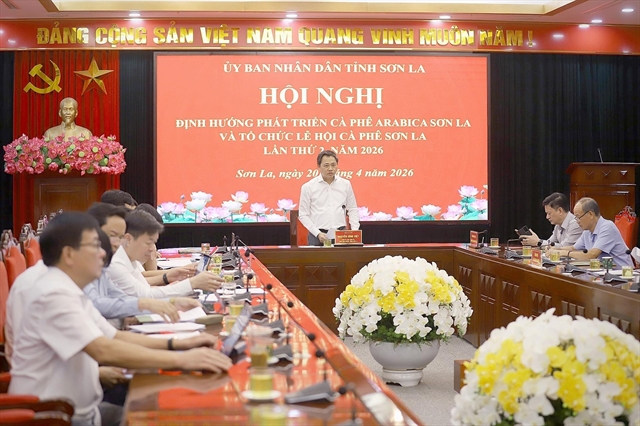
SƠN LA — Sơn La Province is stepping up efforts to position its Arabica coffee as a globally recognised brand, with a strong focus on sustainable, high-quality development and increasing value across the entire production chain.
The People’s Committee of Sơn La Province held a conference on the development orientation of Sơn La Arabica coffee on Monday.
Nguyễn Đình Việt, chairman of the provincial People’s Committee, emphasised that the province would develop its coffee industry in a sustainable, ecological and high-quality direction, aiming to create a specialty product.
The strategy focuses on a market-centred approach, with quality and added value as key benchmarks, gradually positioning Sơn La Arabica as a recognised brand on the global coffee map.
According to a report from the provincial Department of Agriculture and Environment, the province had approximately 26,120 hectares of Arabica coffee, with an estimated output of 37,724 tonnes of green coffee beans by the end of last year.
Coffee exports reached around 27,800 tonnes, valued at US$112.38 million. Sơn La coffee products are now present in demanding markets such as the EU, North America, the Middle East, Japan, South Korea and ASEAN.
In addition to expanding production scale, Sơn La has focused on improving the quality of its raw material areas.
Currently, 23,448 hectares of coffee plantations have obtained sustainable certifications, with certified output estimated at over 28,000 tonnes of green beans per year. The area certified under VietGAP standards is 141 hectares. The province has five coffee products recognised under the OCOP programme, including one five-star product.
Trần Dũng Tiến, deputy director of the provincial Department of Agriculture and Environment, stated that coffee cultivation was delivering clear economic benefits to local farmers.
On average, each hectare generates revenue ranging from VNĐ170 million to over VNĐ200 million, with profits exceeding VNĐ140 million per year, significantly improving incomes, especially for ethnic minority communities in key growing areas.
One of the key priorities for the 2026–2035 period is to build and strongly promote the Sơn La Arabica brand, associated with the land, people and cultural identity of ethnic communities in the Northwest region.
The province also aims to participate in the National Brand Programme, gradually enhancing the competitiveness and position of Sơn La’s coffee enterprises and cooperatives in both domestic and international markets.
Notably, Sơn La will continue to organise the Sơn La Coffee Festival as an annual event to promote and affirm the origin and quality of its Arabica coffee.
The second Sơn La Coffee Festival 2026 is expected to open on October 10 this year.
The festival will be linked with trade promotion, business networking, tourism and investment activities, becoming a meeting point for producers, roasters, exporters and international importers.
According to the development orientation towards 2030, with a vision to 2035, Sơn La plans to maintain approximately 35,000 hectares of coffee, focusing on improving quality rather than expanding quantity.
The province will review and reorganise raw material areas in line with planning, integrate production with environmental protection, adapt to climate change and meet international standards, especially new requirements from export markets.
The Chairman of the Sơn La Provincial People’s Committee also reaffirmed the province’s commitment to improving the investment environment and supporting businesses, cooperatives and coffee farmers by addressing challenges in raw material development, processing and market access.
With its existing potential and strategic direction, Sơn La aims to build a high-quality coffee region capable of producing top-tier Arabica products competitive in the global market. — VNS