Active funds post diverging performance amidst market fluctuations
While the VN-Index's growth is attributed to a group of stocks, many funds are heavily invested in sectors that are still experiencing corrections.
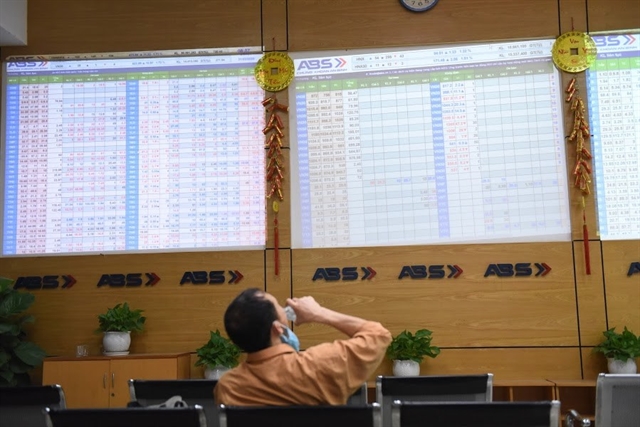
HÀ NỘI — As the market benchmark VN-Index approaches a crucial recovery phase, showing a noticeable rebound, the performance of active funds still trails behind. The discrepancy in portfolios and strategies has widened the gap between leading funds and the rest, despite the overall index improving after previous corrections.
Closing November at 1,691 points, the VN-Index, which represents the Hochiminh Stock Exchange (HoSE), recorded a 3.1 per cent increase compared to October and marked a cumulative rise of 33.5 per cent over the past 11 months.
After two months of consecutive declines, the market positive momentum returned, largely driven by a resurgence in key stocks.
Vingroup (VIC) led the ascent among large-cap stocks, doubling its share price within three months, along with notable recoveries in VietJet Aviation (VJC), Vinamilk (VNM) and Vincom Retail (VRE) as well as select technology and retail stocks.
However, the broader market remained under correction pressure; many stocks saw declines and mid-cap and small-cap stocks faced selling pressure.
In this context, the performance of many active funds has not kept pace with the VN-Index. While the index's growth is attributed to a group of stocks, many funds are heavily invested in sectors that are still undergoing corrections. This divergence has created substantial performance gaps between the funds and the benchmark index.
Data compiled by Fmarket showed that only the BaoViet Equity Dynamic Open-Ended Fund (BVFED) outperformed the VN-Index, achieving a return of 33.6 per cent as of December 2, maintaining its leading position.
This fund is notable for its stable performance over the past two months, primarily due to significant holdings in stocks like Hoa Phat Group (HPG), Asia Commercial Joint Stock Bank (ACB) and VPBank (VPB), which have not undergone steep corrections. Instead, it holds smaller stakes in high-performing stocks such as VIC, VJC, VNM, VRE and FPT Corporation (FPT).
Trailing closely behind is Dragon Capital's DC Dynamic Securities Fund (DCDS) with a return of 27.5 per cent, largely thanks to its investment in VIC. The stock's recent surge in price has allowed DCDS to maintain its strong position, even amid declines in key sectors.
Mirae Asset Vietnam Growth Equity Fund (MAGEF) from Mirae Asset and two funds under MB Capital, Bordier-MB Flagship Growth Fund (BMFF) and MB Capital Value Fund (MBVF), also closely follow the leaders with returns of 26.37 per cent, 24.3 per cent and 21.3 per cent, respectively, as of December 2.
Conversely, diverging performance is emerging rapidly, with the Pyn Elite Fund experiencing a decline for three consecutive months, according to data published on its official website.
Stocks with high exposure to the financial sector, such as Sacombank (STB), MBBank (MBB), VIX Securities (VIX), Orient Commercial Joint Stock Bank (OCB), and Vietnam International Commercial Joint Stock Bank (VIB), faced steep corrections following previous gains.
Additionally, stocks in the aviation sector, like Vietnam Airlines (HVN) and Airports Corporation of Vietnam (ACV), have dragged down the overall performance.
The VESAF fund recorded a profit of only 6.83 per cent as of December 2. Its focus on mid-cap and small-cap stocks has significantly affected its performance during a market that favours large-cap stocks like VIC.
Recent reports indicate increased selling pressure in both bank and non-bank sectors, further impacting the fund.
Similarly, VMEEP from VinaCapital, once among the top-performing open-ended funds in 2024, now stands at 7.19 per cent as of December 2. A wide range of stocks, including MBB, Vietcombank (VCB), Vietinbank (CTG), ACB, FPT, Gemadept (GMD) and Baoviet Holdings (BVH), have seen considerable corrections during this challenging market phase.
The NTPPF fund from NTPAM has shown modest growth of 3.16 per cent, heavily weighted in favour of banking and financial services, which suffered when the financial sector faced profit-taking.
Overall, the performance gap between active funds and the VN-Index has widened, with some funds achieving returns only a fraction of the index's growth.
This disparity highlights the strategic differences between focusing on leading stocks and allocating to sectors that have yet to recover

Positive outlook remains
Despite the pronounced performance differentiation, fund managers maintain a positive outlook for the mid- to long-term.
Petri Deryng, head of the Pyn Elite Fund, recently communicated an upward adjustment for the VN-Index's long-term target to 3,200 points by 2028, based on expectations of average corporate profit growth of 18-20 per cent annually alongside ongoing public investment, market reforms and supportive credit conditions.
Dragon Capital's latest analysis suggests the recent market correction primarily reflects profit-taking after prolonged increases rather than shifts in underlying fundamentals.
Third-quarter earnings reports showed a 21.2 per cent increase in profits year-on-year and a 7.2 per cent rise in revenue, indicating a recovery in core activities for many businesses.
Financial, industrial and consumer sectors continue to drive growth, while real estate is showing signs of recovery due to new policies.
In the short term, the progression of reforms like reducing the time frame from IPO to listing as well as advancing the FTSE upgrade roadmap remains crucial.
Dragon Capital anticipates achievable profit growth targets of 21 per cent in 2025 and 17 per cent in 2026 for its selected Top 80 stocks, particularly as profit quality improves and profits spread beyond large-cap stocks. — BIZHUB/VNS