A proactive and resilient energy system
From a hotel on the Cửa Lò coast to factories in Hà Tĩnh’s industrial parks and households in the central provinces, small energy decisions are becoming part of a much larger national strategy.
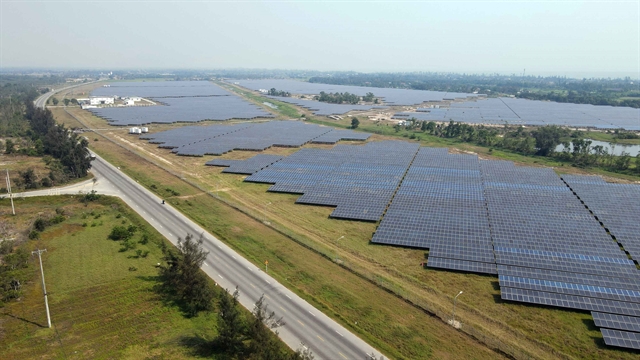
HÀ NỘI — On a sweltering summer afternoon in central Việt Nam, the demand for electricity rises with every air conditioner switched on, every factory production line running and every hotel room filled. But increasingly, the answer to the country’s growing power needs is not simply another power plant — it is also the consumers themselves.
At a hotel on Cửa Lò Beach in Nghệ An Province, electricity-intensive laundry operations are shifted away from peak hours. At a textile factory, production is adjusted to make better use of off-peak electricity while rooftop solar supplies part of its power needs.
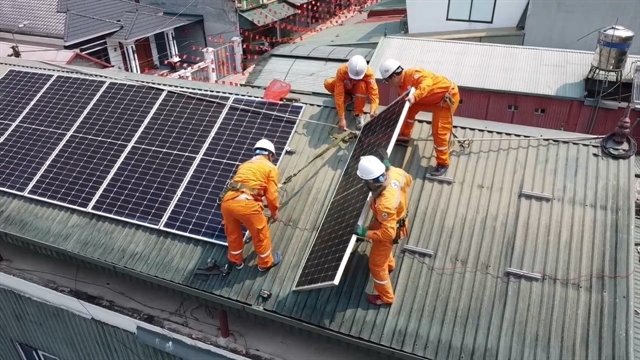
In Hà Tĩnh Province, households and businesses are turning rooftops into small power generators, with batteries providing electricity when the sun goes down or the grid goes off.
These are seemingly modest measures. Together, however, they point to a broader change in Việt Nam’s approach to energy security: consumers themselves are becoming part of the solution.
The shift comes as the country seeks faster economic growth and faces rising electricity demand. It is also consistent with Resolution 70 issued by the Communist Party of Việt Nam on national energy security, which calls for a synchronous, modern, diversified and highly adaptable energy system capable of ensuring sufficient and stable power for national development.
At a national conference in September 2025, Party General Secretary and State President Tô Lâm stressed the need for an energy system that is safe and stable, has reliable reserves, provides sufficient power for production and daily life, moves towards greener and lower-emission energy, operates intelligently on digital platforms and ensures reasonable and transparent costs.
Nearly a year into implementation, that vision is increasingly visible at the grassroots level. At Mường Thanh Cửa Lò Hotel, summer occupancy reaches around 83-85 per cent, putting considerable pressure on cooling, refrigeration and laundry systems.
Everyday solutions
Rather than relying solely on reminders for guests and employees to save electricity, the hotel has incorporated energy efficiency into its daily operations. It has upgraded equipment, adopted more eco-friendly technologies and moved laundry operations away from peak hours.
Võ Huy Tuấn, the hotel’s executive director, said laundry and cooling systems were among the facility’s largest electricity consumers. Adjusting their operating schedules helps reduce peak-hour consumption while allowing the hotel to manage its resources more efficiently.
The same principle applies to manufacturing, where electricity is both an essential input and a significant production cost.
The Nghệ Tĩnh Spinning Joint Stock Company produces around 10,000-11,000 tonnes of cotton yarn annually and consumes about 7 million kWh of electricity a year. The company has shifted some electricity-intensive production to off-peak periods and installed a 4MWp rooftop solar system, which supplies around 30 per cent of its electricity demand.
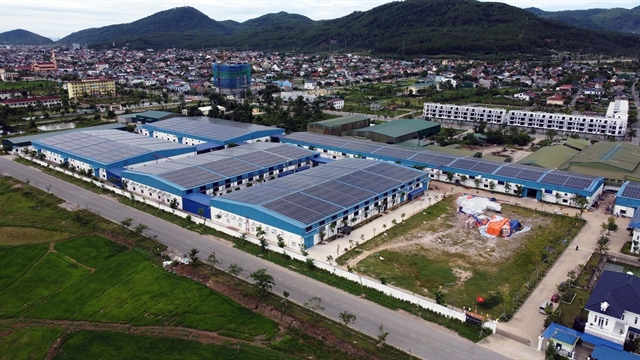
In Thiên Cầm tourism area in Hà Tĩnh, restaurant owner Lê Anh Tuấn has taken simpler steps, replacing old air conditioners and lighting with more efficient equipment and making sure appliances are switched off when not in use.
After receiving advice from electricity officials, his restaurant cut its monthly electricity bill by more than 10 per cent. Such examples illustrate a shift from seeing energy saving as a matter of individual behaviour to recognising it as a component of energy security.
In March the Prime Minister issued a directive setting a target of reducing national electricity consumption by at least 3 per cent in 2026, rising to at least 10 per cent during the peak hot-weather period from April to July. It also called for stronger development of rooftop solar for self-generation and self-consumption.
In Nghệ An, electricity load reached about 1,310MW during heatwaves in May and June, nearly 15 per cent higher than in the same period a year earlier.
In Can Lộc Commune, Hà Tĩnh, peak electricity consumption in June rose by 24 per cent year on year.
The increase reflects both hotter weather and expanding economic activity, particularly industrial production.
Energy assets
For Lê Quang Thanh, deputy director of the Nghệ An Power Company, maintaining reliable supply requires more than increasing generation capacity. “Every consumer can become part of the solution,” he said.
That idea is becoming increasingly important as Việt Nam targets double-digit economic growth. More factories, industrial parks, urban services and tourism will inevitably require more electricity.
Energy efficiency is only one part of the equation. The other is enabling consumers to produce some of the electricity they use.
Across Nghệ An and Hà Tĩnh, rooftop solar is transforming homes, hotels and factories into small, decentralised sources of electricity.
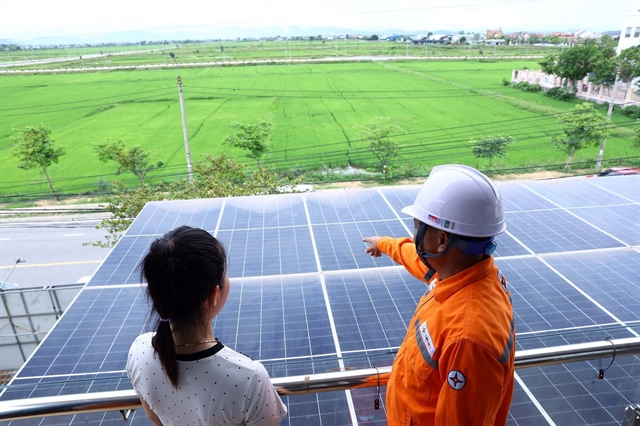
For Nguyễn Trọng Tú in Trường Vinh Ward, Nghệ An, the decision was initially driven by his household’s electricity bill. He installed a nearly 10kWp rooftop solar system together with a 16kWh battery at a cost of around VNĐ190 million (US$7,260).
“When six air conditioners are running simultaneously during the day, solar power can meet most or all of my household’s needs. As sunlight fades, the battery continues supplying electricity until around 9.30-10pm,” he said.
The result has been a reduction of around 70 per cent in his monthly electricity bill. But the battery provides another benefit that is harder to measure in financial terms: resilience.
“When the power goes out, we use electricity from the battery, so we still have power,” said Nguyễn Thị Huyền, who runs a coffee shop at her home in Hà Tĩnh's Can Lộc Commune.
Her family previously paid up to VNĐ6 million ($229) a month for electricity during the summer, when three or four air conditioners were frequently in operation. After installing rooftop solar with battery storage, the monthly bill fell to just over VNĐ2 million ($76).
While households can cut electricity bills, at the same time maintaining power during grid outages, for the national power system, the significance is broader.
Electricity generated close to where it is consumed can reduce the amount of power that needs to be supplied from centralised generation and transmitted over long distances. In this way, thousands of rooftop systems can become small nodes in a much larger distributed energy network.
Hà Tĩnh is well placed to develop this model. The province receives an average of 1,700-2,000 hours of sunshine a year, with relatively high solar radiation between March and September. More than 900 customers in the province already have rooftop solar systems, with a combined capacity of around 160MW.
Phạm Việt Thắng, deputy head of the provincial Electricity Company, said the company was advising households and businesses on system sizes based on actual electricity demand and the capacity of local grids.
Households to industrial areas
The potential becomes even more significant when distributed generation moves into industry.
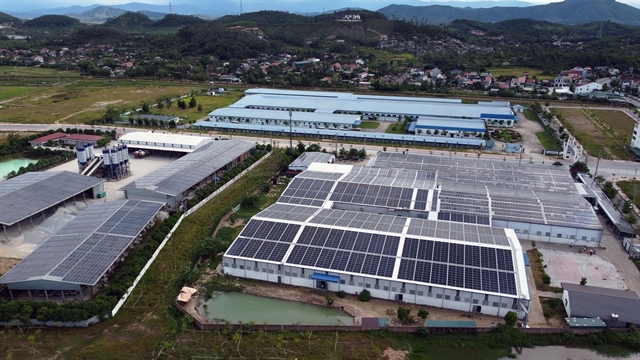
At Đức Thọ Industrial Park in Hà Tĩnh, the Sông La Xanh Packaging JSC has covered nearly 90 per cent of its factory roof with solar panels.
The company previously spent almost VNĐ1 billion ($38,200) a month on electricity. It has now installed a rooftop solar system with a total capacity of about 2.7MWp, including 1.2MWp operating under a self-generation and self-consumption model.
With an investment of more than VNĐ10 billion ($382,000), the system has reduced monthly electricity costs by around 20-25 per cent, with an estimated payback period of seven years.
Phan Chí Tâm, deputy director of the company, said the investment would deliver a double benefit: reducing production costs while easing pressure on the national electricity system during periods of peak demand.
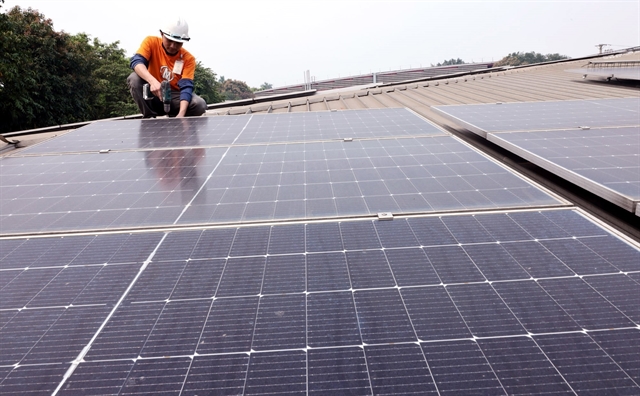
The trend is particularly relevant to Việt Nam’s ambitions to attract high-tech manufacturing.
At WHA Industrial Park in Nghệ An, Goertek Vina operates modern production lines where stable electricity is essential to production schedules and product quality. The company is studying rooftop solar as part of its greener production strategy.
Nguyễn Đình Pháp, an engineer responsible for the factory’s power systems, said the company was working with the local electricity provider to complete the necessary technical requirements. The planned system was expected to help reduce energy costs and emissions while improving the sustainability of production.
The wider numbers suggest that this is no longer a niche trend. During the first half of 2026, the Northern Power Corporation developed 8,500 self-generation and self-consumption rooftop solar customers with combined capacity of nearly 394.5MW. More than 2,000 new customers joined the programme in June alone.
Such figures show the potential for distributed energy to become a meaningful component of the national power system.
Policy opens the door
The economics of rooftop solar have changed significantly with a recent policy adjustment.
A Government decree, issued on June 26, amended regulations on renewable and new energy development and increased the maximum share of surplus electricity from self-generated, self-consumed rooftop solar systems that can be sold to the national grid from 20 per cent to 50 per cent.

The change gives households and businesses greater incentive to invest. At Sao Mai Hotel in Thiên Cầm, Hà Tĩnh, director Nguyễn Trọng Tỏa invested nearly VNĐ800 million ($30,560) in an 86kWp rooftop solar system with battery storage in 2024.
The system has cut electricity costs by around 45 per cent, while the hotel expects the investment to pay for itself in roughly six years.
The hotel, however, faces a common problem. Its peak tourist season runs mainly from April to July, while hot weather can continue into September. Solar generation may therefore exceed the hotel’s immediate needs at certain times. The ability to sell a larger share of surplus electricity to the grid changes the investment calculation.
“When the hotel can sign a contract with the power utility, we will be able to sell surplus electricity,” Tỏa said.
“This can encourage more households and businesses to install rooftop solar systems, both to reduce monthly electricity costs and contribute to renewable energy development.”
The policy, however, is not a substitute for infrastructure. Solar generation fluctuates with weather and time of day. Electricity demand does not always follow the same pattern.
As distributed generation expands, transmission and distribution networks will need sufficient capacity to absorb and manage electricity safely, while system operators will need better forecasting, digital management and energy-storage solutions.
A representative of the Hà Tĩnh Power Company said the size of each rooftop system should be determined according to actual electricity consumption, roof conditions and local grid capacity.
"Too little distributed generation would leave significant potential untapped. But uncontrolled expansion without regard to grid capacity could create new technical challenges," he said.
Shared responsibility
Energy security is traditionally associated with major power plants, fuel supplies and transmission lines. But as electricity demand rises and the economy becomes more energy-intensive, resilience also needs to be built from the bottom up.
A hotel can shift its electricity demand, a factory can generate part of its own power, a household can store solar electricity for use at night, and a restaurant can replace inefficient equipment. Individually, none can substitute for a national power system. Together, however, they can provide an additional layer of flexibility.
This is particularly important for a country seeking rapid economic growth. Industrial expansion, urbanisation, tourism and services will continue to push electricity demand higher.
Meeting that demand cannot depend solely on building more large-scale generation. It also requires making better use of existing resources and mobilising investment from society.
At the national conference last September, President Lâm stressed the need to reform institutions and encourage social resources, particularly the private sector, to participate in renewable energy as well as power transmission and distribution.
The emerging model is therefore one of shared responsibility. The State provides the policy framework, the electricity sector develops and operates the infrastructure, businesses invest in efficiency, and households also become producers and managers of electricity.
The approach is already visible in everyday life: a hotel moving its laundry schedule, a textile mill adjusting production, a factory using its roof to generate electricity, and a family relying on a battery when the grid goes down.
These actions may seem small compared with a major power project. Yet multiplied across thousands of consumers, they can strengthen the system’s ability to cope with peak demand and unexpected disruptions. That is the essence of a proactive approach to energy security. — VNS