HCM City well positioned to develop advanced urban agriculture: seminar
With a dynamic innovation ecosystem and the presence of the Agricultural High-Tech Park, HCM City has strong potential to develop advanced urban farming models, experts have said.
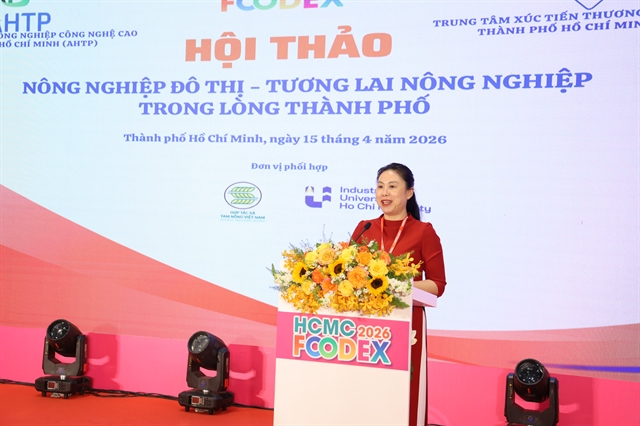
HCM CITY — With a dynamic innovation ecosystem and the presence of the Agricultural High-Tech Park, HCM City has strong potential to develop advanced urban farming models, experts have said.
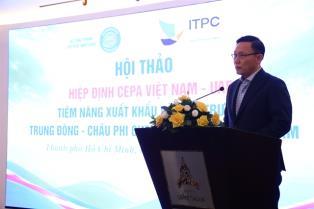
Speaking a the seminar titled "Urban Agriculture – The Future of Farming within the City" co-organised by the Investment and Trade Promotion Centre of HCM City (ITPC) and the park on April 15, they highlighted global and regional trends, particularly high-tech, climate-resilient farming models.
The seminar served as a platform linking management agencies, scientists, businesses, and cooperatives to promote technology transfer, innovation and the application of AI, IoT, automation, and circular economy practices to improve efficiency and value.
Hồ Thị Quyên, deputy director of ITPC, cited a UN report showing that 55 per cent of the world’s population lives in urban areas, a figure projected to reach 68 per cent by 2050.
In Việt Nam, the urbanisation rate has exceeded 40 per cent and continues to rise, putting increasing pressure on food supply, infrastructure and the environment, and underscoring the need for suitable urban agriculture models.
She noted that urban agriculture faces three key challenges: limited land and resources; environmental pressures and climate change; and rising technological demands.
Rapid urbanisation is shrinking farmlands, while higher consumer expectations for quality and traceability are accelerating the adoption of advanced technologies such as AI, IoT and automation.
According to the Food and Agriculture Organization, high-tech agriculture can boost productivity by two to three times while reducing the use of inputs, with the sector growing globally at 10–12 per cent annually.
“In Việt Nam, many such models have been deployed effectively, particularly in major urban areas like HCM City. However, challenges remain in scaling up, especially in linking research, businesses and markets, and transferring technology into production,” Quyên said.
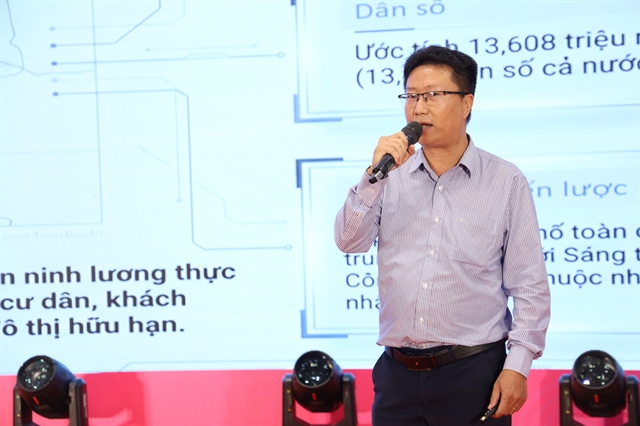
Phạm Cao Khải of the AHTP said HCM City, with a population of more than 14 million but only about 2 per cent of the country’s land area, faces rising food demand amid shrinking agricultural land.
“HCM City is therefore prioritising technology-driven solutions such as water-saving techniques and closed-loop farming powered by renewable energy,” Khải said.
Urban agriculture is no longer just about food supply but an essential part of ecological infrastructure and a core element in building a circular net-zero city, he stressed.
He noted that across the city, rooftops and small spaces are being used for modern farming, including off-grid container farms using solar energy and automated irrigation.
In aquaculture, recirculating systems help minimise pollution, with AI-powered monitoring improving efficiency.
Reporting on outcomes, he said about 70 per cent of more than 550 urban agriculture research projects have been applied in practice, with over 580 production models boosting farmers’ incomes by up to three times. The park has also incubated 48 agritech firms and supported more than 2,000 individuals.
He pointed out that with agriculture accounting for around 30.8 per cent of the country’s emissions, accelerating the green transition is essential.
Modern biotechnology is helping turn urban agriculture into a “carbon sink,” supporting HCM City’s access to green finance and its net-zero target by 2050, he added.
Nguyễn Thị Vân Anh, director of Tam Nông Việt Nam Cooperative, said urban agriculture also offers a practical household-level solution.
Families can use balconies or small spaces to grow produce through container planting, hydroponics or automated systems.
She added that expanding household urban farming not only ensures safer food but also increases urban greenery, cools living spaces and reduces waste.
Encouraging wider participation could significantly enhance food self-sufficiency and contribute to a greener urban environment, she said. — VNS